TheYardWise Assessment
- Suitability: ★★★★☆ — Good — one minor risk to manage
- + Growing season and GDD are long enough for this crop.
- + Approx. 183-day growing season supports this crop.
- + No major climate blockers detected for this zone.
- Confidence: Medium
This guide uses city-level climate data. Your actual sunlight exposure, soil condition, and garden layout are not included. A personalized Garden Report adjusts these factors.
- Best Timing: Early in the season, before sustained heat sets in
- Main Advantage: The growing degree days in this zone are sufficient for Garlic to reach maturity.
- Seasonal note: Summer heat is the main seasonal constraint — plan the main harvest for the cool shoulders of the season.
- Key Advice: Cool-season crop — prioritize early planting and succession sowing.
How this recommendation was determined
Recommendations are generated from TheYardWise’s climate, plant and planting-window data, reviewed against our published methodology.
- Recommended window: Early in the season, before sustained heat sets in
- Decision rules applied: Frost risk, Growing-degree maturity, Heat stress, Growing season
Understanding Zone 7's Climate for Growing Garlic
Zone 7's numbers can look like uncomplicated good news: roughly 183 frost-free days and 2,800 growing degree days. For garlic, that long, warm season is a mixed blessing, because heat — not cold — is what limits the crop.
The zone is defined by its winter minimum temperatures: cold enough to matter, mild enough that many plants survive. The April 6 to October 6 frost dates bracket a generous frost-free window of about six months. But a frost date only tells you when freezing temperatures stop; it says nothing about whether a crop actually wants the warmth that follows. Garlic is a cool-season plant. Its spring window opens early, before sustained heat sets in, and its fall window comes late, once temperatures drop back below the heat-stress threshold. The frost dates mark the outer edges of what's possible, not the useful middle.
That's where 2,800 GDD becomes relevant. A season that accumulates heat this quickly moves garlic through growth and bulbing fast, and quality slips once the crop is sitting in real summer warmth. The opportunity lies in the margins: the mild shoulder seasons let garlic do most of its work while conditions are still cool, and the long season leaves room to schedule around the heat rather than through it.
Treat garlic as a shoulder-season crop here, not a summer one. Heat is the main limitation, and frost dates alone won't tell you when to act — the cooler margins of that window are what count. Your own site, from how quickly your soil warms to how much afternoon shade a bed receives, will shift those margins further. The next question is which margin to plant into.
Optimal Planting Window for Garlic in Zone 7
Garlic's timing in Zone 7 comes down to heat, and that usually points to fall planting as the stronger bet. With roughly 240 days from planting to a finished bulb, the crop needs a long, cool run rather than a quick sprint before summer arrives. Get the start wrong and the plant either sits in soil too warm to establish or runs out of cool weather before it bulbs.
| Window | Timing signal | What it means for garlic |
|---|---|---|
| Fall (late season) | Plant as temperatures cool below the heat-stress threshold | The long cycle runs through the cool months and finishes before the following summer's heat |
| Spring (early season) | Plant early, before sustained heat sets in | Workable, but the 240-day cycle bumps into rising heat sooner, leaving less margin |
The signals to watch
Temperature is the practical trigger in both directions. You want soil that's cool but still workable — cool enough that bulbs aren't sitting in lingering summer warmth, yet not so close to hard winter cold that roots can't establish. If the ground is still hot to the touch, wait; if it's frozen or the season is clearly past, the window has closed.
Day length is the second signal, and it's why fall planting suits garlic so well. Bulbing is driven by lengthening days, so a crop that establishes roots through the cool months is positioned to size up as spring days stretch out — before heat shuts the process down.
A few things to confirm locally: a south-facing bed or heat-retaining wall can push a window earlier, while an exposed or shaded spot runs later, so the same season can behave differently across one yard. The 240-day figure and these general windows reflect plant physiology rather than a precise local weather record, so your actual timing will shift with microclimate and the year's frost pattern.
Timing sets the stage, but it doesn't cover everything that can go wrong once cloves are in the ground.
Common Problems When Growing Garlic in Zone 7
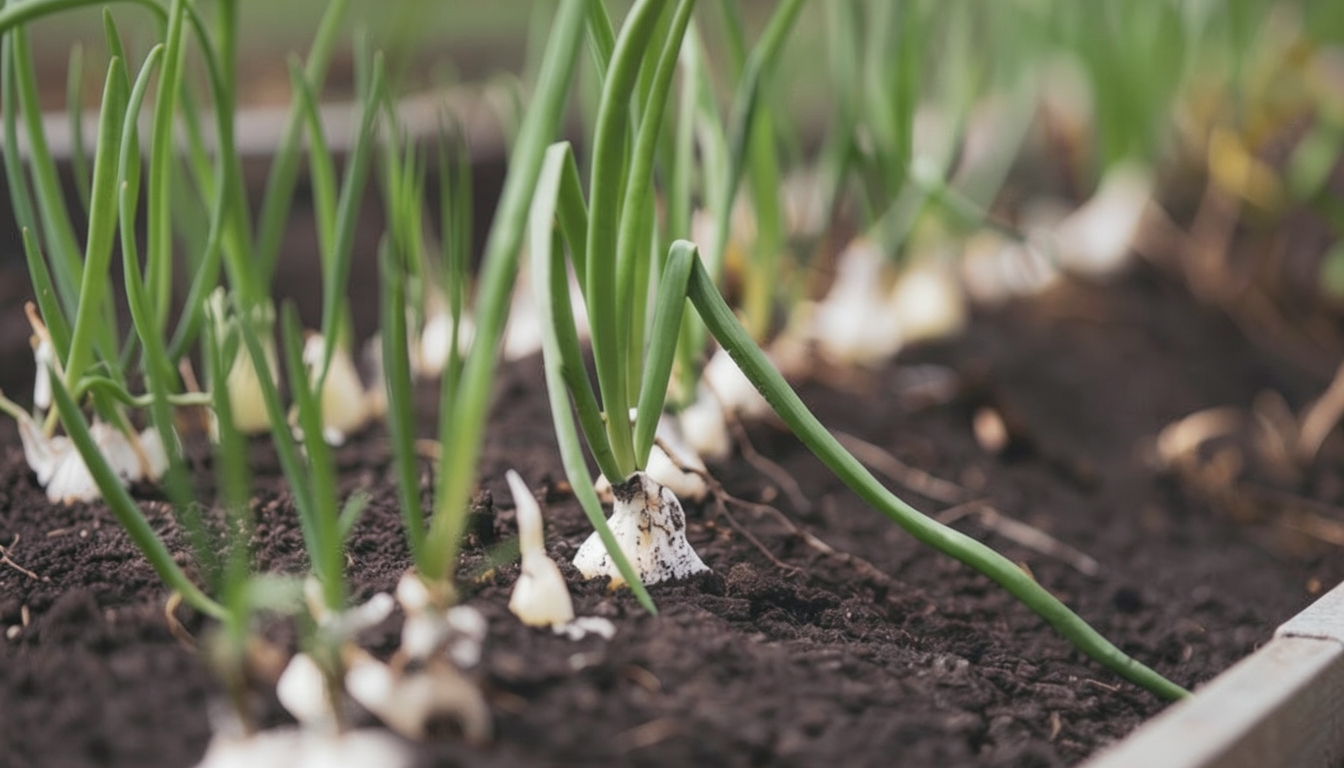
The problem that most consistently limits garlic in Zone 7 isn't cold — the plant is frost-hardy, and the climate itself poses no significant limitation beyond heat. It's heat arriving while bulbs are still trying to size. Bulbing runs on two clocks: lengthening days trigger it, but the actual swell depends on the plant still growing actively in cool, moist soil. When late spring soil warms quickly, the plant shifts toward early dormancy — leaves yellow and flop ahead of schedule, and you dig small bulbs or single-clove "rounds" that never divided. Prevention leans almost entirely on timing, which is why the fall window, when temperatures drop back below the heat-stress threshold, and the early spring window, before sustained heat sets in, matter so much. Cool-season establishment builds the leaf area that later fills bulbs, and mulch helps hold soil temperatures steadier through the finish.
Winter heaving is the second common failure, and it's a subtler one. The foliage shrugs off frost, but the zone's repeated freeze-thaw cycles can alternately lift and settle the soil surface, physically pushing shallow-set cloves upward. Once roots are exposed and dry, the clove stalls. Planting at proper depth and mulching after planting buffer the soil against those swings and keep roots anchored.
Soil-borne rots — the white rot, basal rot, and pink root complex — are a third recurring trouble. Because garlic is grown from cloves rather than seed, pathogens can ride in on the planting stock and then persist in the soil for years, waiting on the next allium. Early signs are stunted, yellowing plants that wilt from the base, sometimes with fuzzy white growth where the clove meets the soil. There's no rescue once it's established, so prevention is structural: start with clean, firm cloves, plant into well-drained ground, and rotate away from any allium for several seasons.
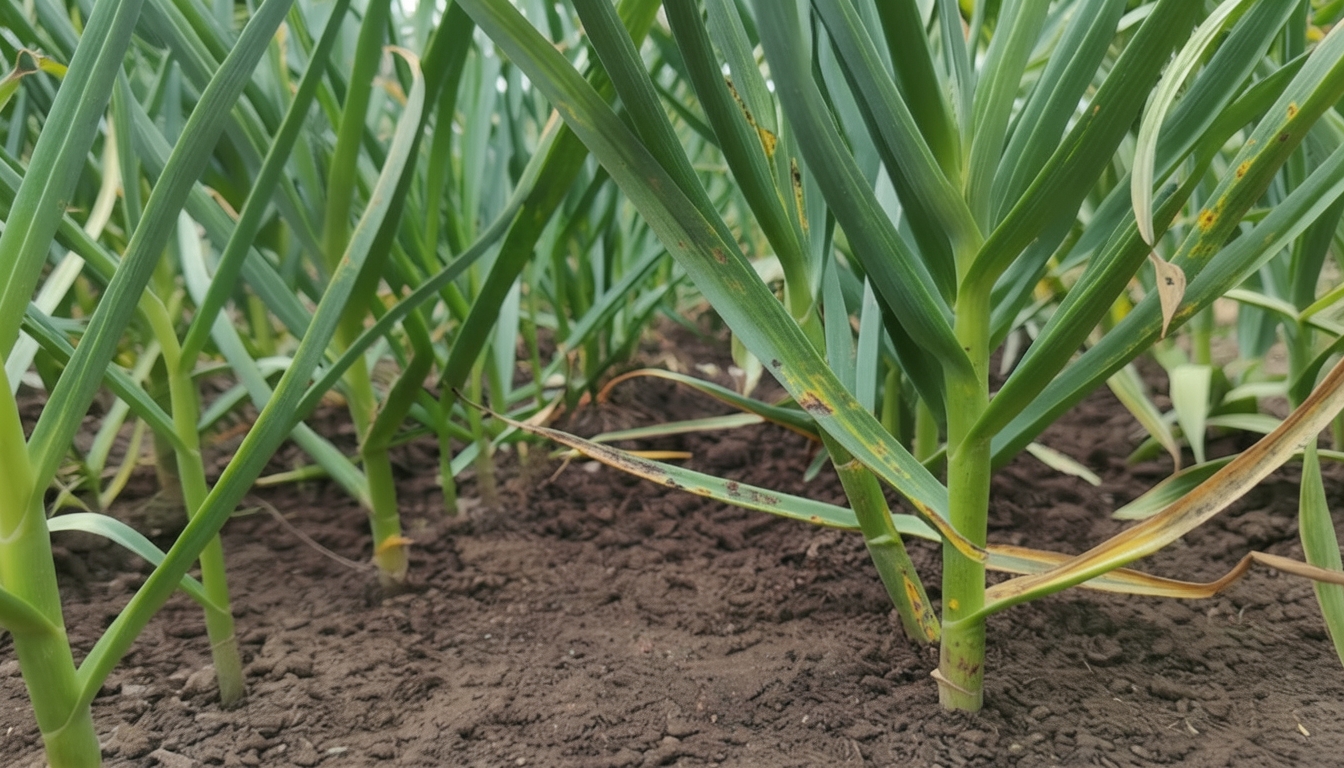
Foliar fungal disease rounds out the list. Rust, botrytis, and purple blotch all exploit the same conditions — cool, wet leaves and still, humid air in a crowded bed. Orange pustules or gray mold on the foliage reduce the leaf area doing photosynthesis, which directly shrinks the bulb. Wider spacing, good airflow, and watering at the base rather than overhead keep leaves dry and interrupt that cycle.
Which of these your own soil, drainage, and planting date actually expose you to is the personal part. The defenses, though, are mostly cultural — sun, drainage, spacing, clean stock — which is where the practical choices begin.
→ See how your personalized garden plan comes together — watch a quick walkthrough.
Pro Tips for Garlic Success in Zone 7
Give garlic the sunniest, best-drained ground you have. It's a full-sun crop, and with heat as the pressure point here, a bed that drains freely and doesn't stay soggy does more for bulb size than richness alone. If your soil holds water, plant in a raised bed instead of fighting the drainage.
Keep the soil evenly moist through the cool growing months, then ease off as the leaves start to yellow. Steady early moisture drives the leaf growth that later feeds bulb size, while wet soil at the finish invites split or rotting bulbs. A generous layer of mulch earns its keep twice over: it holds moisture and keeps the soil cooler as heat builds — which matters more here than almost anything else you can do.
Space cloves about 6 inches apart in every direction. Garlic isn't a vertical candidate, so there's no trellis to gain you room; it earns its yield from ground area, and crowding produces smaller bulbs and more disease pressure. That spacing also keeps air moving between plants — exactly what the foliar diseases above need you to deny them.
Tomatoes and roses make good neighbors. Both are traditionally interplanted with garlic, which has a long-standing reputation for discouraging pests, and neither competes aggressively for the same root zone. Leave peas and beans out of the bed — alliums tend to set legumes back rather than help them.
Get Your Personalized Garden Plan
The general guidance above answers the common question for most Zone 7 gardeners: choose cool-season garlic varieties that bulb up before heat becomes the limiting factor. What it can't account for is your particular patch of ground. A south-facing bed that warms early, a wind-exposed corner, or ground tucked against a heat-retaining wall can all shift how garlic performs, even within the same USDA zone. TheYardWise builds personalized garden plans from your exact location data, so variety choice and timing reflect your conditions rather than an average. See your planting plan for your exact location.