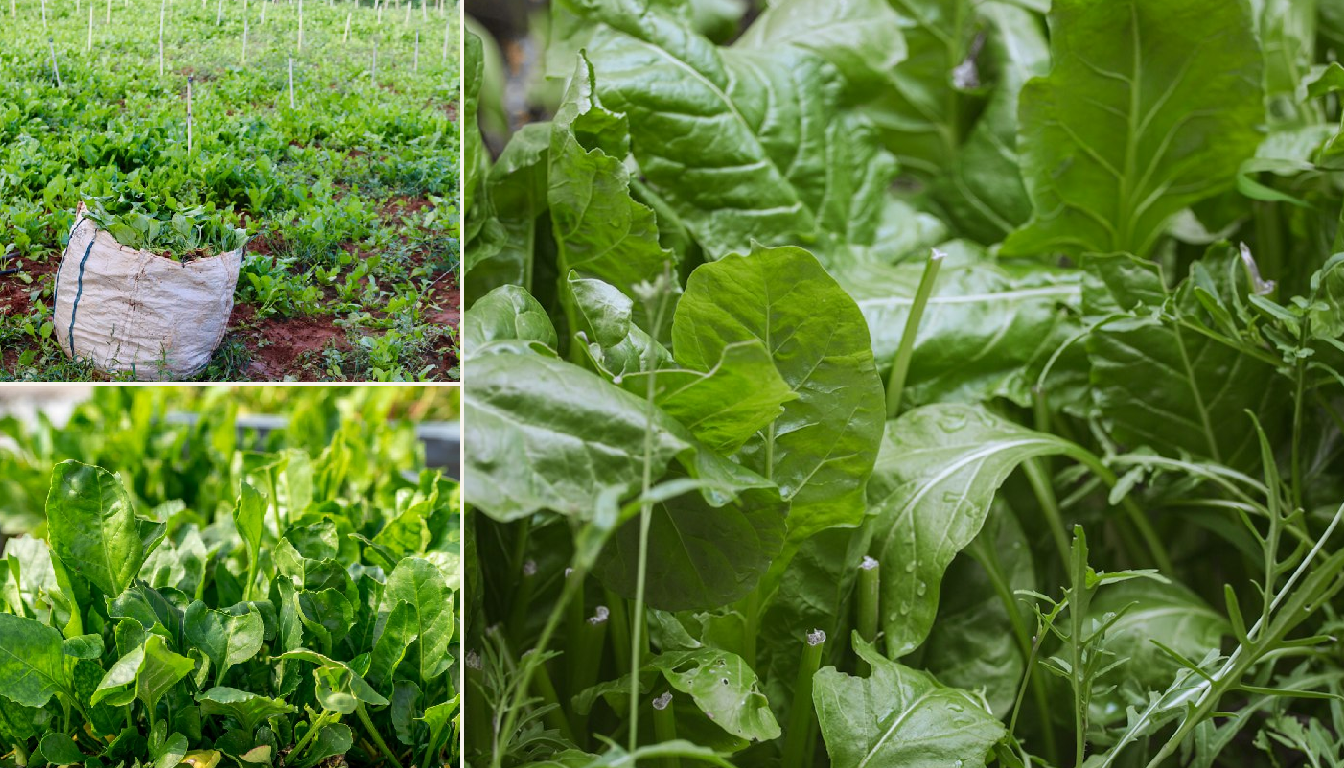
TheYardWise Assessment
- Suitability: ★★★★★ — Excellent — all core conditions met
- + Based on the plant's general growing requirements.
- + No major climate blockers detected for the plant's general requirements.
- Confidence: Limited
This guide covers the plant's general needs. Your exact USDA zone and local frost dates shift the timing — a personalized Garden Report starts from your location.
- Best Timing: Early in the season, before sustained heat sets in
- Main Advantage: No major climate blockers detected for the plant's general requirements.
- Seasonal note: Summer heat is the main seasonal constraint — plan the main harvest for the cool shoulders of the season.
- Key Advice: Cool-season crop — prioritize early planting and succession sowing.
How this recommendation was determined
Recommendations are generated from TheYardWise’s climate, plant and planting-window data, reviewed against our published methodology.
- Recommended window: Early in the season, before sustained heat sets in
What Spinach Need to Thrive
Spinach is a cool-season crop with shallow roots, and those two traits shape nearly every decision you make in the garden. The first genuinely warm spell of the year is usually what ends a spinach patch — not neglect, not pests — so soil, light, and moisture are best arranged around keeping leaves tender while conditions stay mild.
Soil comes first. Spinach does best in a loose, moisture-retentive loam that drains freely without drying out quickly. It tolerates a fairly wide pH range, roughly 5.5 to 7.5, with about 6.5 sitting in the comfortable middle; in that band nutrients stay available and you avoid the pale, struggling leaves that come with soil swung too far in either direction. Work in compost before sowing to build both fertility and that crumbly structure, and if you'd rather amend precisely than by guesswork, a soil test is the sensible starting point.
For sun, full sun is fine while the weather is genuinely cool, but partial shade earns its place as the season warms. A few hours of afternoon shade slows the plant's rush toward bolting and stretches your harvest. If your bed bakes all day, shifting to a spot with late-day shade is one of the easiest improvements you can make.
Watering follows from those shallow roots. They feed from the top few inches of soil, so steady moisture matters more than occasional deep soakings. Water when the surface just begins to dry, keep the rhythm consistent — dry spells stress plants and push them toward seed — and mulch to hold moisture and keep the soil cooler.
Understanding How Spinach Grows
Cool conditions are what spinach wants, and heat is what it cannot handle — that single trait explains nearly everything about how the plant behaves. In its comfort range, with cool days and cool nights, germination is quick, leaves expand steadily, and the plant keeps pushing new growth from its crown instead of switching to reproduction. Push past the upper end and the response is fast and largely irreversible: the plant bolts, sending up a flower stalk, while the leaves narrow and turn increasingly bitter, so harvest quality can collapse within days. Below the lower end, growth simply slows; the plant usually survives, it just sits rather than sizing up.
Days to maturity runs about 40. That's seed to a harvestable crop under reasonable conditions: cool, moist soil and uninterrupted growth. Because spinach is a short-cycle crop, the temperatures it experiences during those weeks matter more than any single date. A sowing that grows through mild weather can reach cutting size in roughly that window, while one that runs into a warm spell may bolt before it ever fills out.
Frost tolerance, by contrast, is genuinely high — spinach is classified as hardy. Light frosts don't kill it, and established plants often keep producing through cold snaps. Cold also concentrates sugars in the leaves, which is typically described as improving flavour. Young seedlings are a little more exposed than established plants, but hardiness is spinach's baseline rather than a lucky exception.
Read those three traits together and the pattern is clear: heat, not cold, is what limits this crop. Spinach rewards being grown while conditions stay cool and being finished before sustained warmth arrives.
How to Plant Spinach: Basics for Any Garden
The whole planting plan comes down to getting spinach established while the weather is still mild, then doing it again when the season turns back toward cool. Skip the calendar; read the weather instead.
Prepare the soil first. Spinach roots are shallow, so all the work happens in the top few inches. Loosen that layer and work in finished compost so it holds moisture but still drains — soggy, compacted ground is where shallow-rooted spinach struggles most. In a container, use a quality potting mix rather than garden soil; a shallow root system dries out fast in a pot.
Space plants about six inches apart in each direction, which is what 0.25 square feet per plant works out to. Broadcast seed and thin to that spacing once the seedlings are up and showing true leaves, or sow in rows and thin to the same distance. Don't crowd them hoping for more harvest — crowded spinach bolts faster and yields less.
Time it by soil and air, not by the calendar. Sow in spring as soon as the ground is workable and the soil has warmed enough to be crumbly rather than clumpy: early in the season, before sustained heat settles in. Then plan a second sowing for late season, when daytime temperatures have dropped and nights are cooling again. That fall window is often the more reliable one, because the plants grow into cooling weather instead of racing against rising heat.
After planting, keep the top inch or two consistently moist — those shallow roots make even short dry spells count. Water gently at the base, and mulch once plants are established to hold that moisture and keep soil temperatures down as the season warms. A light nitrogen feed helps if leaves look pale, but don't overdo it.
Your exact sowing moment depends on your own ground and microclimate — a south-facing bed warms earlier than a shaded corner.
→ See how your personalized garden plan comes together — watch a quick walkthrough.
Common Spinach Problems and How to Avoid Them
Bolting is the problem spinach growers meet most often, and it is physiological rather than infectious — which is why the sowing windows above matter more than any spray or feed. When temperatures rise past the plant's comfort range, it stops making leaves and shifts to reproduction: a central stalk elongates, new leaves narrow and turn pointed, and the flavour sharpens into bitterness. Heat and lengthening days trigger stem elongation and flowering, and once that switch flips it does not reverse. Prevention is mostly scheduling and moisture — sow so the crop matures early in the season, before sustained heat sets in, or make a late sowing as temperatures cool; keep soil evenly moist, since drought stress accelerates the shift; and choose slow-bolting varieties. The afternoon shade mentioned earlier helps too in a hot spot.
Downy mildew shows as pale yellow patches on the upper leaf surface with a grayish-purple fuzzy growth underneath. It is caused by a water-mold pathogen that depends on leaf wetness and still, humid air. Prevent it by spacing plants for airflow, watering at the soil line in the morning rather than overhead, rotating away from beets and chard, and cleaning up crop debris.
Leafminer damage appears as meandering whitish tunnels or blotches where larvae feed between the leaf layers, leaving the outer skin intact. Simple prevention: cover seedlings with floating row cover before the flies appear, crush or remove infested leaves promptly, and keep the bed free of related weeds and crop residues.
Damping off strikes seedlings, which collapse at the soil line with pinched, water-soaked stems. It is caused by soilborne fungi and water molds that flourish in cold, saturated, poorly aerated seed-starting media. Use a well-drained mix, water sparingly, thin crowded seedlings, and give starts good air movement.
Your bed's drainage, shade, and sowing dates decide which of these you actually meet.
Get a Personalized Garden Plan for Your Exact Location
Timing spinach around cool weather is the part general guidance handles well — the rest depends on your ground. Your soil, how much sun the bed receives, and how quickly your local climate warms all shift those spring and fall windows, so treat the advice above as a starting point rather than a fixed date. TheYardWise builds a planting plan from your exact location data, so spinach timing and the crops you actually want to grow line up with your garden instead of a regional average. Build a planting plan around your chosen crops.