TheYardWise Assessment
- Suitability: ★★★★★ — Excellent — all core conditions met
- + Based on the plant's general growing requirements.
- + No major climate blockers detected for the plant's general requirements.
- Confidence: Limited
This guide covers the plant's general needs. Your exact USDA zone and local frost dates shift the timing — a personalized Garden Report starts from your location.
- Best Timing: Early in the season, before sustained heat sets in
- Main Advantage: No major climate blockers detected for the plant's general requirements.
- Seasonal note: Summer heat is the main seasonal constraint — plan the main harvest for the cool shoulders of the season.
- Key Advice: Cool-season crop — prioritize early planting and succession sowing.
How this recommendation was determined
Recommendations are generated from TheYardWise’s climate, plant and planting-window data, reviewed against our published methodology.
- Recommended window: Early in the season, before sustained heat sets in
Onion Dying: A Troubleshooting Guide: What's Going Wrong
There's a particular frustration in watching a row of onions stand upright all spring and then go limp and yellow just as the bulbs should be sizing up. It feels like something went wrong, but with onions the decline usually follows a fairly predictable script.
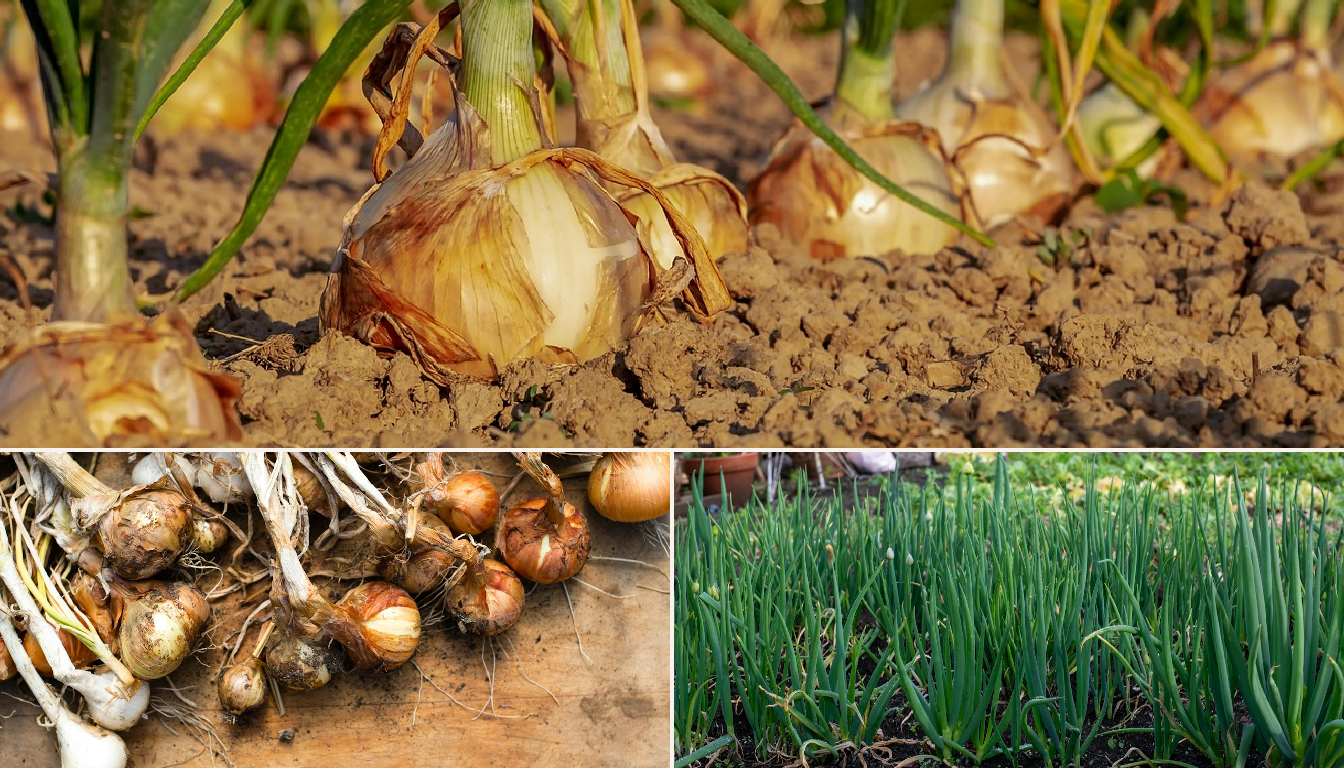
What it looks like: the change almost always starts at the leaf tips, which yellow first, then the discoloration moves down the outermost, oldest leaves while newer growth stays greener a little longer. Leaves lose their stiffness and fold or sag, especially in the afternoon. In a stressed planting the tops may topple while still green rather than drying down in the slow, papery way a ripening onion does, and the bulbs stay small and soft instead of firm.
When it appears: onions are a cool-season crop, and their spring window closes as sustained heat sets in. Decline tied to that shift shows up once the mild early-season weather gives way to real warmth — the same heat that ends their productive stretch. Fall plantings can show identical symptoms if a warm spell arrives before the bulbs put on size. Since onions are frost hardy, a cold snap is a far less likely explanation than heat.
How to confirm it: check soil moisture a few inches down before blaming the weather — dry soil produces a very similar picture. Then look at the pattern. A whole bed collapsing together through a hot stretch points one direction; a single plant failing points toward pests or rot, so look for chewing, holes, fuzzy growth, or soft, odorous tissue. Finally, compare against normal maturity. A ripening onion dries from the top down, and its neck softens and flops — that's the finish line, not a problem. Yellowness beginning at the tips while the leaf bases are still plump and green is stress, not ripening.
General answers only go so far — your soil, planting date, and microclimate decide which of these you're actually looking at. That's what a personalized TheYardWise report is for.
The Science Behind Onion Dying: A Troubleshooting Guide
Those yellowing tops are the visible end of a process that begins inside the plant, and it rarely traces to cold. The plant's metabolism is calibrated to a narrow cool band, and once air and soil push past it, the same physiology that fills a bulb starts working against the plant. In sustained heat, tissue reaches a lethal threshold: enzymes lose their shape, membranes lose their selective permeability, and cells in the leaves collapse faster than the plant can replace them. The yellowing and dieback you see is the downstream sign of that cellular failure, not something arriving from outside.
Two forces reinforce each other here: sustained heat and a water supply that can't keep pace with it. Onions are a cool-season crop whose main climate limitation is heat, and their medium water requirement — met through a shallow fibrous root system — gives them little buffering capacity. As transpiration demand climbs and soil moisture drops, the plant closes its stomata to conserve water, which also shuts down the carbon gain needed to maintain leaf tissue. A hot, dry stretch therefore compounds: the plant can neither cool itself nor feed itself.
Susceptibility is built into the crop's architecture. Onions invest in leaf growth before they bulb, and photosynthesis in those leaves is what fills the bulb. Heat stress during that phase doesn't merely slow growth — it interrupts the translocation of sugars into storage tissue, leaving the plant holding leaves it can't sustain and a bulb it can't finish. Because heat is the main climate limitation for onions, dieback tends to follow a thermal runway: the spring window opens early, before sustained heat sets in, and the fall window only reopens as temperatures drop back below the heat-stress threshold. In between, the plant runs out of cool hours — and window timing is a general estimate drawn from plant physiology, so a sun-baked bed can run ahead of a shaded one by weeks.
How to Prevent Onion Dying: A Troubleshooting Guide Before It Starts
Most onions that decline mid-season were set up to fail weeks earlier, which is why prevention comes down to how you prepare the bed and time the crop. Heat is the factor most likely to stall them, so the real work happens in soil, spacing, water, and timing — long before you see a yellowing leaf.
Start with soil that drains freely but holds moisture evenly. Onion roots are shallow and unforgiving of compaction, so loosen the bed deeply and work in organic matter ahead of planting. Avoid low spots where water collects; roots and developing bulbs that sit wet are far more prone to rot than those in ground that sheds excess water.
Spacing matters more than many gardeners expect. At 0.25 square feet per plant — roughly a 6-inch grid each way — each onion gets room for its roots and, just as importantly, room for air to move. Crowded plantings trap humidity around the foliage, slow drying after rain or dew, and force plants to compete for the same moisture. Free airflow between rows is one of the cheapest disease-prevention tools you have.
For watering, aim for steady, deep moisture rather than swings between drought and saturation. Soak thoroughly, then let the top inch of soil dry before watering again. Sandy ground dries faster and needs lighter, more frequent passes; heavier clay holds water longer and needs less frequent, deeper soakings. Ease off as bulbs mature and tops begin to fall over.
Timing is your strongest lever. Plant early in spring, before sustained heat sets in, or in the fall window as temperatures drop back below the heat-stress threshold. Heat-stressed onions stop growing well and decline quickly, so matching the crop to the cool stretches of your season prevents most of what a troubleshooting guide would otherwise try to fix.
None of this guarantees a perfect crop, but it removes the conditions most onions die from. Your soil, drainage, and microclimate are what determine how these levers get tuned — which is exactly what a personalized TheYardWise report works out for your garden.
→ See how your personalized garden plan comes together — watch a quick walkthrough.
If It's Already Happening: Recovery Steps
If onions are already collapsing, the honest answer is that the ones with fully browned, flopped-over tops will not size up any further — that's a loss to accept, not reverse. So triage first: firm bulbs with any green left are worth saving; soft-necked, mushy, or foul-smelling bulbs are not, and leaving them in the ground invites rot to spread to healthy neighbors. Pull the goners and use them immediately as green onions rather than trying to cure them for storage.
For what's still standing, the priority is moisture stability. Onions want steady, even water — not the drench-and-drought cycle that usually finishes off stressed plants. Water deeply when the top inch or two dries, and mulch to keep root-zone temperatures down. Full sun is fine; it's the sustained heat that's the limiting factor here, and you can't shade your way out of a summer that's already arrived.
What you can realistically save: plants that still have upright green tops and firm necks may keep bulbing if you hold moisture steady until the tops yellow naturally. Don't push nitrogen to force growth — that produces soft, poorly storing bulbs.
If the whole planting is gone, treat it as a timing lesson rather than a defeat. The reliable windows for this cool-season crop are early spring, before sustained heat sets in, and again late season as temperatures fall below the heat-stress threshold — and that late planting is a genuine second chance. For your specific beds and frost timing, a personalized TheYardWise report can pin down those windows more precisely than general guidance can.
Prevent Problems With a Personalized Garden Plan
Most onion problems that lead to dying plants — watering, soil, disease, timing — can be diagnosed and corrected with the guidance above, and those fixes hold up in most gardens. What shifts from one yard to the next is which risks you'll actually face: a heat-trapping south wall may push onions into stress earlier than an open bed nearby, and drainage or soil differences change how quickly rot develops. TheYardWise reads your local climate data and pairs it with the crops you want to grow, so prevention targets your garden's real risks instead of a generic checklist. Build a planting plan around your chosen crops.