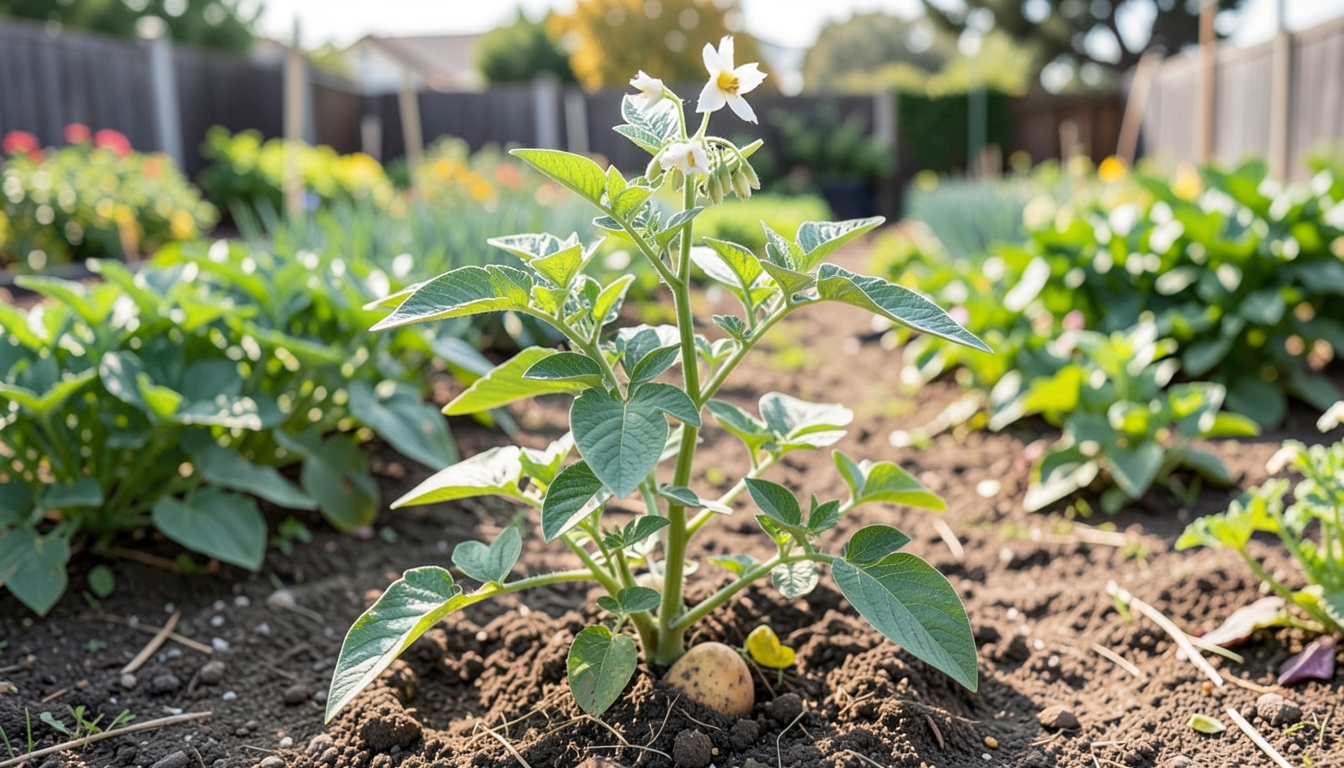
TheYardWise Assessment
- Suitability: ★★★★☆ — ★★★★☆ Good — one minor risk to manage
- + Growing season and GDD are long enough for this crop.
- + Approx. 183-day growing season supports this crop.
- − Extreme summer heat may reduce fruit set without shade or heat-tolerant varieties.
- Confidence: Medium
This guide uses city-level climate data. Your actual sunlight exposure, soil condition, and garden layout are not included. A personalized Garden Report adjusts these factors.
- Best Timing: Early in the season, before sustained heat sets in
- Main Advantage: The growing degree days in this zone are sufficient for Potato to reach maturity.
- Main Risk: Potato has low heat tolerance; this zone endures ~20+ days of extreme heat. Expect heat stress without shade or heat-tolerant varieties.
- Key Advice: Plan the main harvest before peak summer heat, or choose heat-set varieties.
How this recommendation was determined
Recommendations are generated from TheYardWise’s climate, plant and planting-window data, reviewed against our published methodology.
- Recommended window: Early in the season, before sustained heat sets in
- Decision rules applied: Frost risk, Growing-degree maturity, Heat stress, Growing season
- Key risk addressed: Potato has low heat tolerance; this zone endures ~20+ days of extreme heat. Expect heat stress without shade or heat-tolerant varieties.
Understanding Los Angeles's Climate for Growing Potato
On a warm Los Angeles afternoon in July, the last thing a potato plant wants is more heat — and that is the central paradox of growing it here. Los Angeles's USDA Zone 10a rating describes how cold it typically gets in winter, and by that measure the city is forgiving: frost is rare and mild, so frozen ground is not the obstacle potatoes face in colder zones. But a zone rating says nothing about summer heat, and heat is what defines the potato's prospects here.
The region accumulates roughly 5,500 growing degree days — a measure of the heat energy available to drive plant growth. That is abundant warmth, and it pushes potatoes through their cycle quickly: foliage grows fast and tubers size up rapidly. The catch is that potatoes are cool-season plants. They are built for the temperate conditions of spring and fall, not for the sustained warmth a long, sunny season can deliver. What is an opportunity for heat-loving crops is, for the potato, a countdown.
Frost dates mark the outer edges of possibility: a last spring frost around March 22 and a first fall frost around September 21, bracketing about 183 frost-free days. But frost-free is not stress-free. The warm middle of that window is exactly when heat becomes the limiting factor for a cool-season crop — growth slows and plants decline. So the real opportunity lies in the cooler margins of the frost-free window: the opening weeks of the season, before sustained heat sets in, and the closing weeks as heat finally recedes. Los Angeles's climate offers two mild bookends around an overheated middle — the potato succeeds at the bookends.
Optimal Planting Window for Potato in Los Angeles
Potatoes in Los Angeles give you two real chances a year, and both are about dodging heat rather than frost. In Zone 10a, winter cold is rarely the problem — the limiting factor is heat, so potatoes are grown here as a cool-season crop with a heat-avoid strategy. The practical upshot: plant a spring crop early in the season, before sustained heat sets in, or plant a late-season crop once temperatures cool back below the heat-stress threshold. To be honest about the calendar: there's no reliable date window pinned to LA specifically, so read the season rather than the dates.
Why timing matters: potatoes need about 90 days from planting to maturity. In spring, that means getting them in the ground while the soil is still cool — if sustained heat arrives before the plants have finished bulking, growth stalls and yields drop off. In fall, the logic runs in reverse: plant late enough that the 90-day stretch lands in genuinely cooling temperatures, which is why this window opens only after the hot stretch has clearly broken. Zone 10a's mild winters mean a fall-planted crop can mature straight through the cool season with little frost worry.
Signals to watch:
- Soil and air temperature are your real calendar. In spring, plant while the ground is still cool and daytime heat hasn't become the rule. In fall, hold off until the hot stretch has clearly broken and days carry a genuine cool edge, especially at night.
- Day length is a supporting cue, not the driving one. Shortening days in late summer are a handy reminder that the fall window is approaching, but temperature decides when it actually opens.
- Once sustained heat arrives, the spring window is closed — don't squeeze in a late planting, because the heat will catch the crop before the 90 days are up.
Common Problems When Growing Potato in Los Angeles
In Los Angeles, most potato failures reduce to one root cause: heat. Potatoes are a cool-season crop growing in a zone 10a climate where heat is the primary limiting factor. Here is what typically goes wrong.
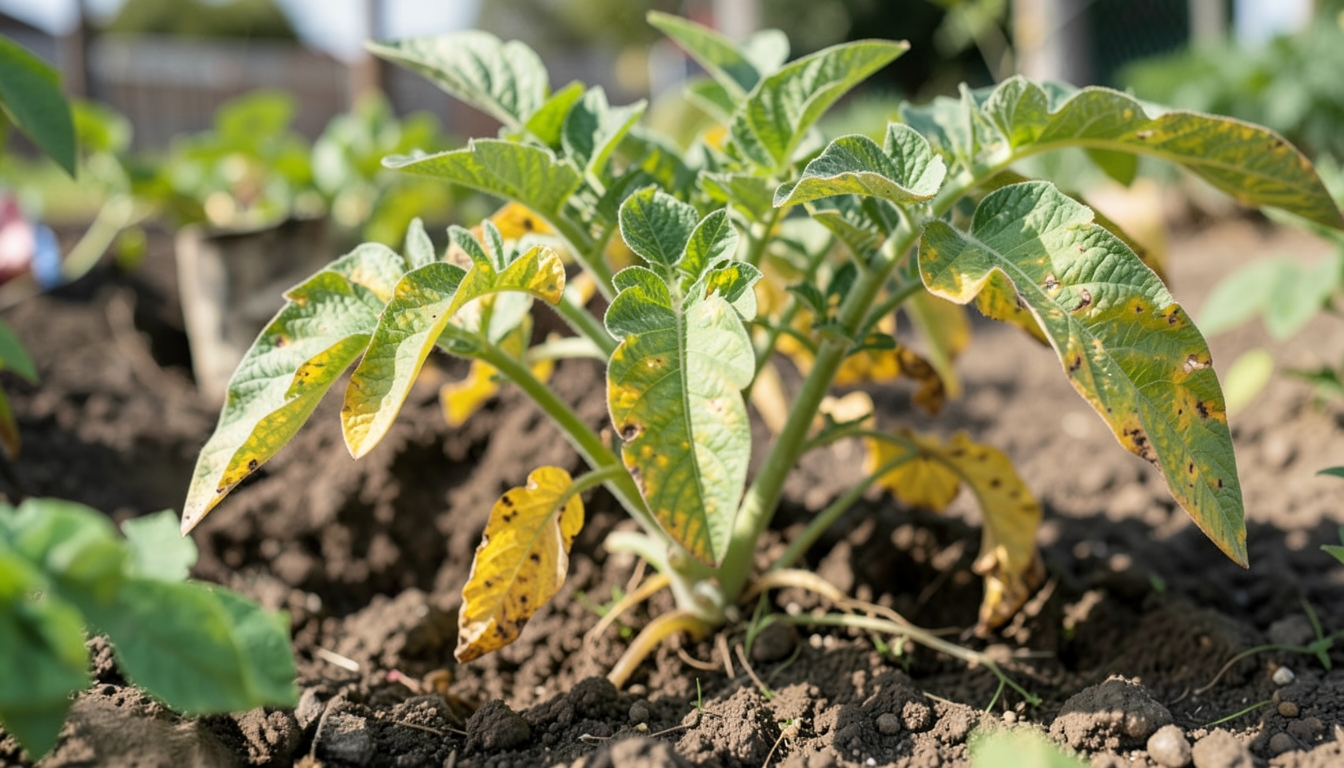
1. Sudden vine death. Plants look healthy one week, then yellow, wilt, and collapse — sometimes just as harvest should be coming. This is heat collapse, and in this climate it is more common than disease. In warm weather, the plant's respiration rate outpaces photosynthesis; the vine begins burning through the energy stored in its tubers just to stay alive, and above a certain warmth threshold it gives up. Because zone 10a moves into sustained heat quickly, this dieback typically arrives as spring turns to summer. Prevention: plant in the early spring window, before sustained heat sets in, and keep a thick mulch over the root zone to hold soil temperatures down. A fall planting in the late-season window, once temperatures cool below the heat-stress threshold, sidesteps the problem entirely.
2. Vigorous vines, tiny harvest. The foliage looks great, but the payoff is few or undersized tubers. Heat suppresses tuber initiation even while the vine keeps growing, so the plant pours its energy into leaves instead of potatoes. Squeezed into a warm zone, a cool-season crop has a short window for tuber set, and one warm spell at the wrong moment costs yield. Prevention: time planting so tuber set happens in genuinely cool weather, and water consistently during the weeks after flowering when tubers bulk up — stress during that stretch shrinks the crop quickly.
3. Knobby, cracked tubers. Tubers that look like strings of lumps, or show growth cracks and hollow centers, are a temperature-fluctuation problem. Warm conditions halt tuber growth; when cooler weather returns, growth restarts — and each stop-start cycle leaves ridges, knobs, or internal cracking. The heat-avoid planting strategy is the main defense: an early spring planting lets the crop size up before sustained heat, and the fall window starts as temperatures drop. Mulch also cushions day-to-night soil temperature swings.
4. Seed pieces rotting before they emerge. Potatoes are semi-hardy, so a freeze is not the worry in zone 10a — warm soil is. If seed pieces go in too late, or a heat spell arrives right after planting, warm moist soil can soften them and rot them before sprouts form. Prevention: plant in the early spring window, avoid overwatering before emergence, and use certified seed pieces that sprout promptly.
→ See how your personalized garden plan comes together — watch a quick walkthrough.
Pro Tips for Potato Success in Los Angeles
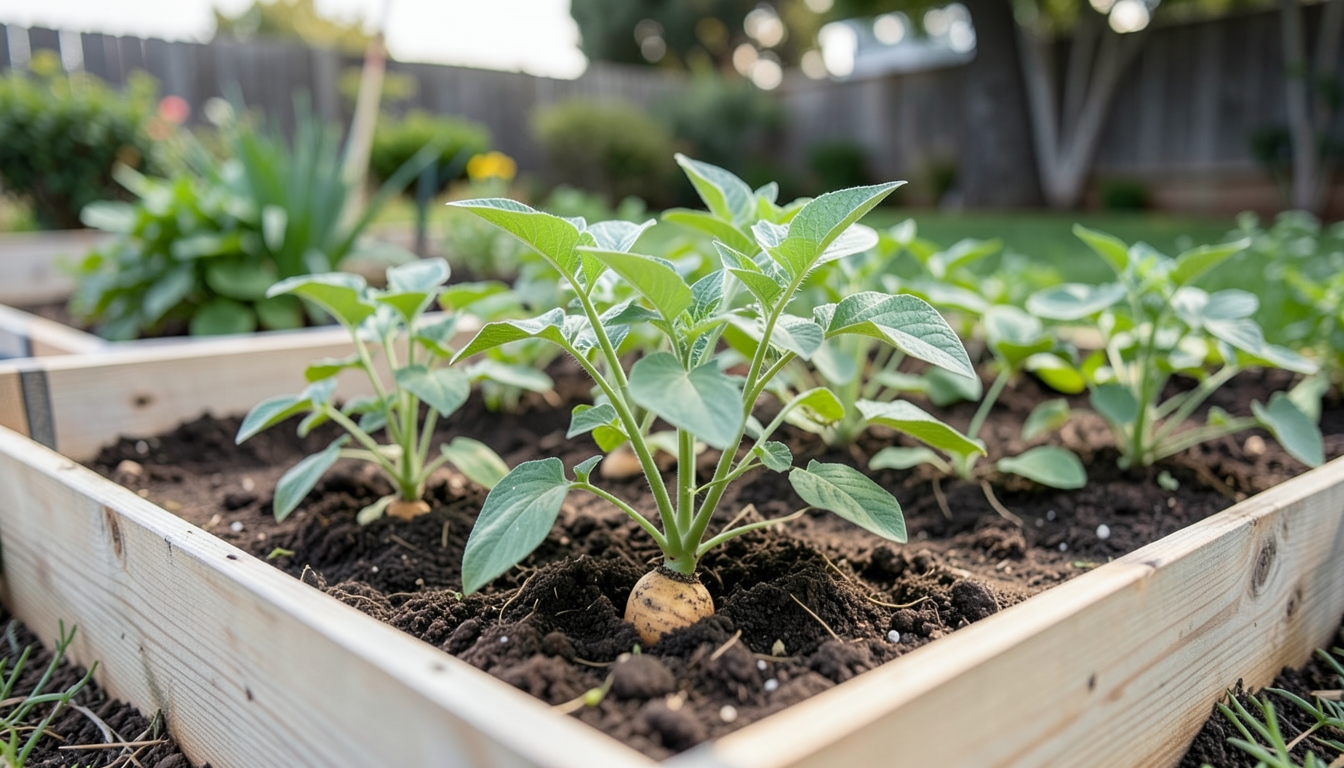
Give each potato plant a full square foot of garden space, and use that room to hill. One square foot per plant might look generous, but in a warm zone like 10a it is doing two jobs: it gives you space to mound soil or mulch around the stems as plants grow, which keeps forming tubers covered and productive, and it lets air move through the foliage. Potatoes aren't a vertical crop, so spacing is the main tool you have — crowding them invites disease in exactly the heat that already stresses this cool-season plant.
Water deeply and keep the soil evenly moist, never soggy. Potatoes are sensitive to swings in moisture while tubers are sizing up, and in Los Angeles' dry season that means consistent, deep soakings rather than frequent light sprinkles. A thick mulch around the base does double duty: it slows evaporation and shades the soil, buffering heat that can otherwise stress or even collapse plants in warm weather. If your soil drains quickly, water more often; if it holds water, ease off.
For companions, two traditional partners are worth a spot: bush beans, whose roots host nitrogen-fixing bacteria that feed the soil, and marigolds, long planted near potatoes for their reputed effect on nematodes. Neither is a cure-all, but both tuck easily between plants and add something useful without competing for sun.
Finally, keep any exposed tuber covered with hilled soil or mulch. Sun hitting a developing potato turns it green and bitter — a simple, avoidable loss in a garden where the sun is relentless.
Get Your Personalized Garden Plan
The general guidance above gives you the essentials for growing potatoes in Los Angeles: aim for the cool windows before sustained heat sets in, and finish before heat stresses the vines. But every garden is unique. A sunny south-facing bed, a wind-exposed corner, or a heat-retaining wall can shift timing by weeks — even within USDA Zone 10a. That’s where a personalized plan helps. TheYardWise uses your exact location and local climate data to tailor planting windows and care steps to your garden, not a generic regional average.