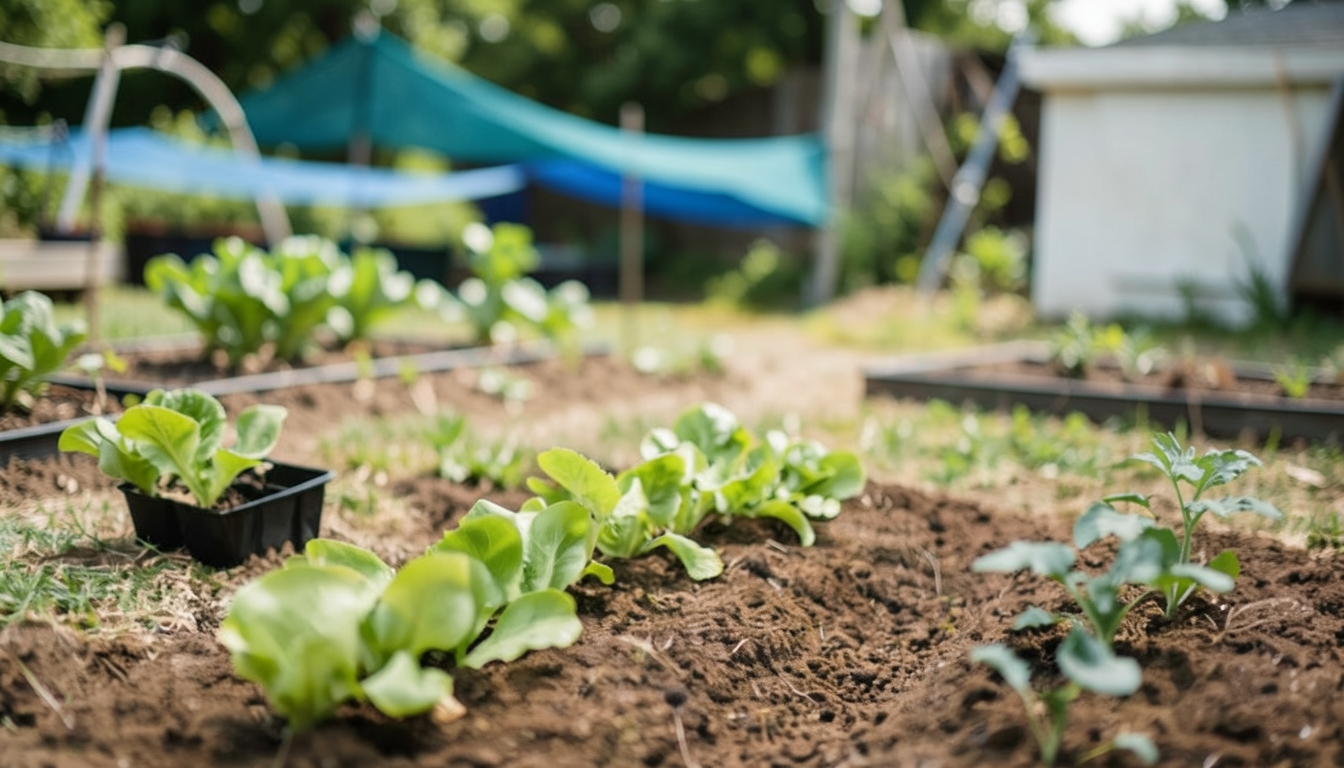
TheYardWise Assessment
- Suitability: ★★★★★ — Excellent — all core conditions met
- + Growing season and GDD are long enough for this crop.
- + Approx. 307-day growing season supports this crop.
- + No major climate blockers detected for this zone.
- Confidence: Medium
This guide uses city-level climate data. Your actual sunlight exposure, soil condition, and garden layout are not included. A personalized Garden Report adjusts these factors.
- Best Timing: Early in the season, before sustained heat sets in
- Main Advantage: The growing degree days in this zone are sufficient for Lettuce to reach maturity.
- Seasonal note: Summer heat is the main seasonal constraint — plan the main harvest for the cool shoulders of the season.
- Key Advice: Cool-season crop — prioritize early planting and succession sowing.
How this recommendation was determined
Recommendations are generated from TheYardWise’s climate, plant and planting-window data, reviewed against our published methodology.
- Recommended window: Early in the season, before sustained heat sets in
- Decision rules applied: Frost risk, Growing-degree maturity, Heat stress, Growing season
Understanding Austin's Climate for Growing Lettuce
A long frost-free season is not the same as a long lettuce season. Austin's 307 frost-free days — February 11 through December 14 — combined with roughly 4,232 growing degree days describe a climate that accumulates heat quickly, and lettuce is a cool-season crop that loses eating quality as that heat builds.
That reframes what Zone 8b actually offers. Zone 8b means mild winters with only occasional freezes, and hard frost is unlikely after February 11, so a spring crop can go in early instead of waiting on a late thaw. The catch is what ends the window: not cold, but warmth. Because 4,232 GDD pile up fast, spring turns hot early and the comfortable stretch closes sooner than the calendar alone suggests. The frost-free period is far wider than the range lettuce prefers, so the usable time sits at its cool margins — early spring before sustained heat settles in, then again in late fall as temperatures fall back below the heat-stress threshold. The December 14 frost date matters here too: it opens a long, mostly freeze-light cool stretch that lettuce can occupy.
So treat garden lettuce in Austin as a shoulder-season crop rather than a summer one. Mild winters and a broad cool half of the year are the opportunity; the heat that follows is the limiting factor. Soil reaction across the region swings widely, from about pH 5 to 8.2, a span lettuce tolerates reasonably well — so a soil test is the sensible way to decide on amendments rather than guessing.
Optimal Planting Window for Lettuce in Austin
Which is why timing is the whole game with lettuce in Austin, and 45 days to maturity is the number that drives it. That's short enough to fit a crop into a narrow cool gap, but slow enough that a late start leaves plants still filling out when the heat arrives — and that's when lettuce turns bitter and bolts instead of heading.
The window here runs qualitatively rather than by fixed dates: early in the season before sustained heat sets in, and again late in the season as temperatures drop back below the heat-stress threshold. Think in two stretches rather than two dates — the opening of spring, and the back half of fall once the worst of summer has broken.
| Window | What signals it's time | Cost of getting it wrong |
|---|---|---|
| Spring | Soil has warmed enough to work and germinate, but nights are still cool and days are still short | A late start pushes harvest into heat — bolting, bitterness, no head |
| Fall | Nights are cooling and the daily peaks are no longer heat-stress territory | A too-early start means seed that sulks or sprouts into heat and stalls |
Watch two signals more than the calendar. First, soil warmth: lettuce germinates and grows best in cool soil, so if the ground still feels cold and wet to the touch, wait; if it's already warmed into summer territory, you've missed the spring slot. Second, day length working against you in spring — lengthening days combined with rising heat are what trigger bolting, which is why an early start matters more than a slightly bigger seedling.
Because maturity takes about 45 days, the practical move is to count backward. In spring, pick your start so the heads finish before sustained heat settles in; in fall, start late enough that the crop matures in cooling weather rather than racing the last hot stretch. If you want a continuous supply, small successions a couple of weeks apart beat one big planting.
Your exact last-frost and first-cool-night timing varies block to block. The free answer here covers the general window; a TheYardWise personalized report pins it to your garden's own microclimate.
Common Problems When Growing Lettuce in Austin
Heat is the thread that runs through nearly every lettuce failure in Austin, and most of the trouble shows up as flavor or texture long before a plant actually dies.
Bolting is the most familiar one. The plant stops making leaves you want to eat and shoots up a stiff central stalk that soon carries small flowers. Because lettuce is cool-season and limited primarily by heat, sustained warmth tells the plant its growing season is ending and its energy should go into reproducing rather than into tender foliage. Leaves turn bitter and tough at the same time. The practical defense is to arrange the crop so it matures during the cooler shoulders of the year — the timing the window above describes — favor slower-bolting types, harvest outer leaves while the plant is still vegetative, and throw afternoon shade over a bed when a warm stretch arrives.
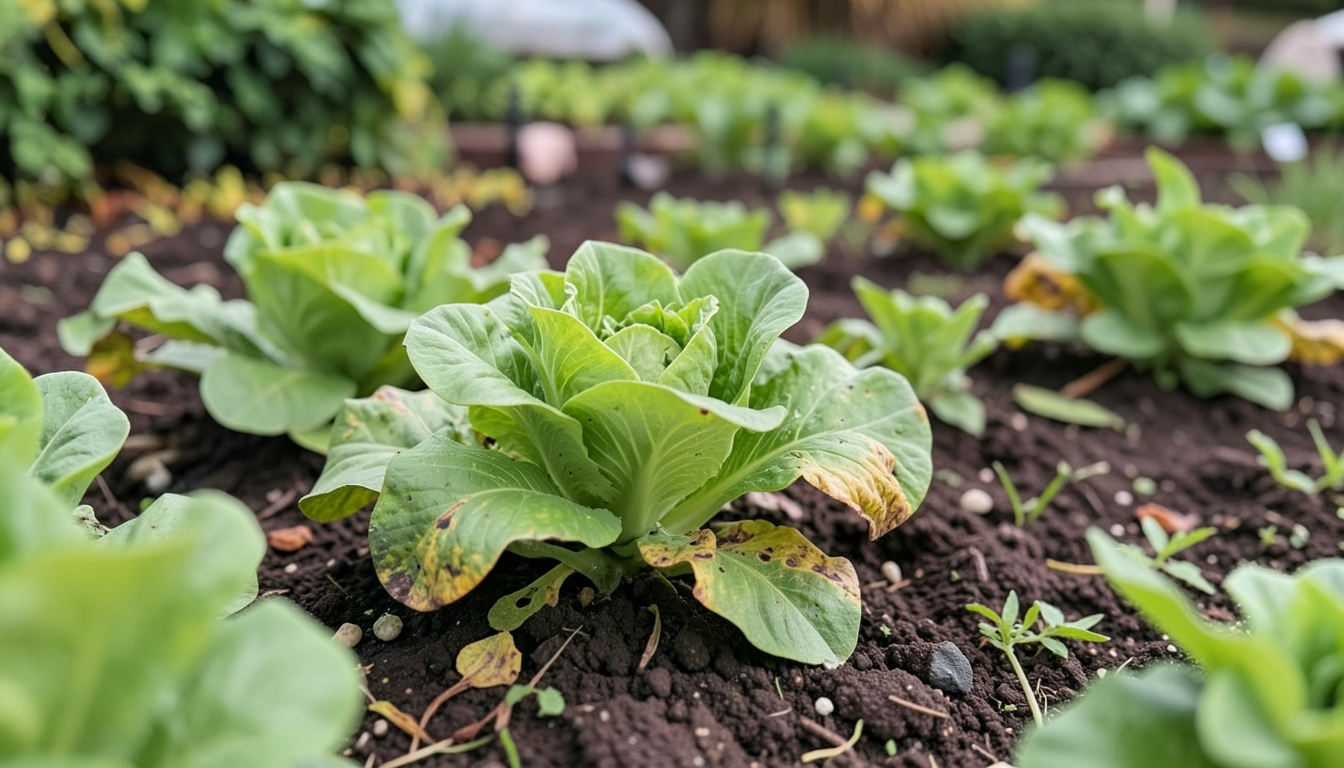
Tipburn looks like brown, papery margins on the leaves buried inside the head, even when the outside looks perfect. This is usually a calcium-delivery problem rather than a soil deficiency. Calcium travels with the water moving through the plant, and inner leaves transpire very little, so when growth is pushed fast by heat and moisture swings, those margins get starved of calcium just as they are expanding fastest. Steady irrigation, restrained nitrogen feeding, and decent airflow around the plants all reduce the mismatch between how fast the plant grows and how reliably it can supply that tissue.
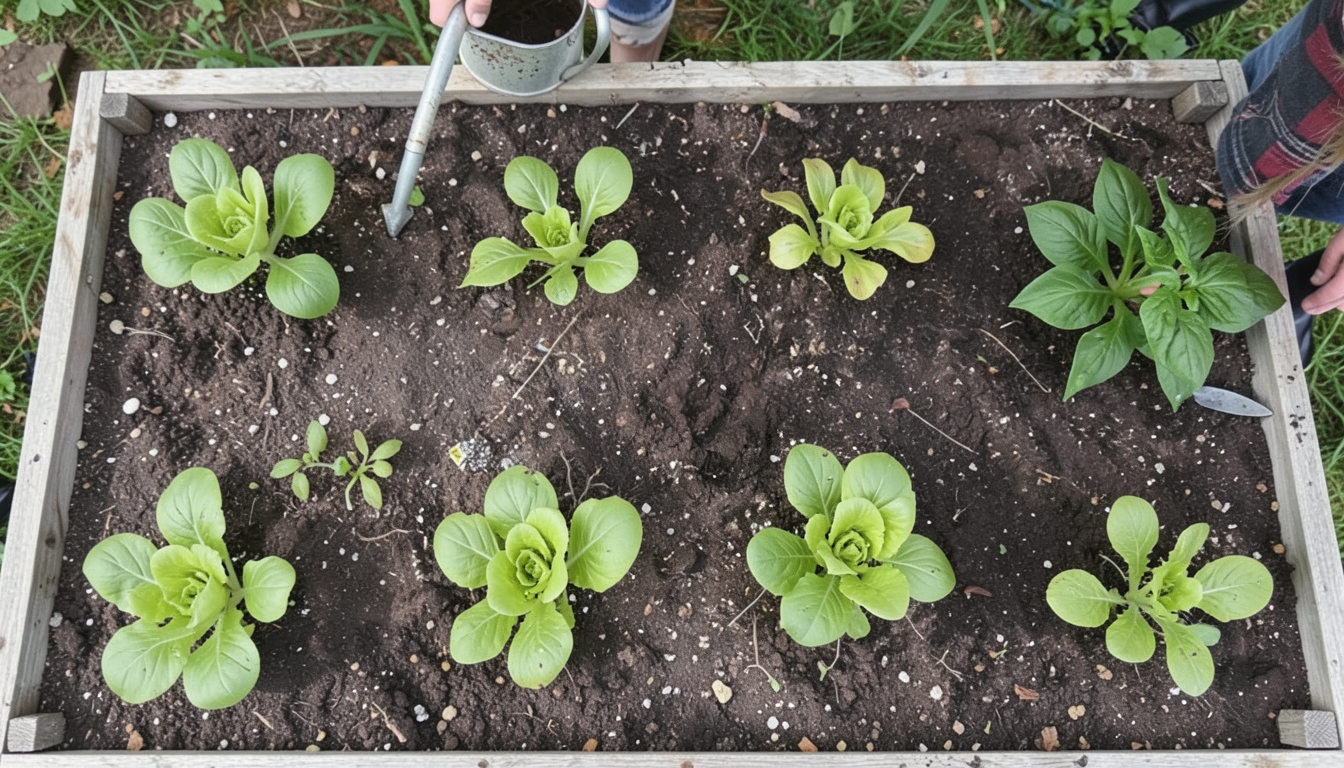
Weak or missing seedlings are common too. Lettuce seed is inhibited by warm soil, so sowing into ground that is already hot often produces a thin, patchy stand and spindly seedlings even when the seed is fine. Starting transplants in a cooler corner, keeping the seedbed shaded and consistently moist, and letting the fall sowing ride the natural cooldown all work with that biology instead of against it.
Finally, lettuce is only semi-hardy. It shrugs off a light frost but not a hard freeze, so a fall planting that sizes up late can be lost in a single cold night. Aim to have heads close to harvestable before the first hard freezes, and keep row cover on hand for the coldest nights.
The general shape of these problems is predictable from the climate alone. Which one hits your bed first depends on your soil, your shade, and how your particular corner of the city holds heat — the kind of detail a personalized TheYardWise report is built to sort out.
→ See how your personalized garden plan comes together — watch a quick walkthrough.
Pro Tips for Lettuce Success in Austin
Lettuce's roots are shallow and fine, which explains almost everything about managing it here: they dry out fast, they heat up fast, and once the root zone stays warm, the plant quits putting energy into leaves and starts bolting. Keep that in mind and the rest falls into place.
Sun is where most lettuce gets lost. Lettuce tolerates full sun to partial shade, but in Zone 8b, "full sun" during a hot stretch means soil that bakes and dries within hours — exactly the condition that ends a lettuce crop early. Aim for a spot with morning sun and shade from midday onward, or tuck plants where a taller neighbor casts afternoon shadow. That single choice buys you weeks of harvest.
Water with the roots in mind, not the calendar. Give a deep soak so moisture reaches below the shallow root mass, then let the top inch dry before watering again. A loose, compost-rich soil that holds moisture but drains freely supports that rhythm; a layer of mulch on the surface keeps the soil temperature down and stretches the time between waterings.
Space plants at roughly half a square foot per plant. That spacing lets leaves overlap enough to shade the soil surface and suppress weeds while still leaving airflow between plants — worth having when humidity and warmth combine.
For companions, radishes are the classic pairing: they germinate quickly, break up a crusted surface, and mark your rows before lettuce fills in. Chives or another allium nearby is a long-standing garden habit for confusing aphids. Lettuce is not a climbing crop, so skip trellises and let it work as a low, living mulch beneath taller plants instead.
The general rules are straightforward; how they land depends on your beds, your shade, and your water. A personalized report for your garden pulls those together.
Get Your Personalized Garden Plan
The general guidance above answers the common question: in Austin's Zone 8b, lettuce is a cool-season crop, so the reliable windows are early spring before sustained heat and again in fall once temperatures drop below the heat-stress threshold. What stays personal is your garden's own microclimate — a sunny south-facing bed, a wind-exposed corner, or a heat-retaining wall can each shift how quickly soil warms and how long lettuce holds. TheYardWise builds a personalized plan from your exact location data, timing each sowing to your conditions. See your planting plan for Austin.