TheYardWise Assessment
- Suitability: ★★★★★ Excellent — all core conditions met
- + Growing season and GDD are long enough for this crop.
- + Approx. 183-day growing season supports this crop.
- − No major climate blockers detected for this zone.
- Confidence: Medium
This guide uses city-level climate data. Your actual sunlight exposure, soil condition, and garden layout are not included. A personalized Garden Report adjusts these factors.
- Best Timing: Early in the season, before sustained heat sets in
- Main Advantage: The growing degree days in this zone are sufficient for Carrot to reach maturity.
- Key Advice: Cool-season crop — prioritize early planting and succession sowing.
How this recommendation was determined
Recommendations are generated from TheYardWise’s climate, plant and planting-window data, reviewed against our published methodology.
- Recommended window: Early in the season, before sustained heat sets in
- Decision rules applied: Frost risk, Growing-degree maturity, Heat stress, Growing season
Understanding Chicago's Climate for Growing Carrot
Chicago hands carrot growers a generous calendar but a tricky thermostat. The frost-free window runs 183 days, from April 11 to October 11, yet carrots are a cool-season crop whose primary limiting factor is heat. The days that matter for them are the cooler shoulders of that window, not the hot middle of it.
The USDA Zone (6a) describes how cold winters get, which matters most for overwintering perennials; for an annual vegetable like carrot, it mainly signals a growing season long enough to work with. The 183 frost-free days confirm that.
The 2400 growing degree days (GDD) measure the season's accumulated warmth available to drive growth. That total is ample for carrots to reach maturity. The catch is that GDD accumulates fastest in midsummer — precisely when sustained heat stops cool-season carrots from sizing up quality roots. A carrot prefers the milder end of the thermometer, not the warm end.
The frost dates frame the opportunity. April 11 and October 11 mark when temperatures stay above freezing, but the plant's preferred temperature range sits inside the cooler margins of that frame — early, before sustained heat builds, and late, as temperatures cool back below the stress threshold. That is why Chicago's heat-avoid approach for carrots follows directly from the climate: one long season, worked at both cool ends.
Optimal Planting Window for Carrot in Chicago
Keep the 70-day countdown in the cool part of the calendar, because that is what planting carrots in Chicago really comes down to. Carrots are a cool-season crop grown on a heat-avoid strategy: heat is the limiting factor here, and a carrot needs roughly 70 days from seed to maturity. So the entire timing question is one thing — make sure those 70 days run while temperatures are still cool, not as summer heat builds.
The spring window is a seasonal signal more than a set of dates. Plant early in the season, before sustained heat settles in — as soon as the soil thaws and turns workable, while daytime highs and overnight lows are still on the cool side and the forecast isn't trending into a long warm stretch. If you wait until warm weather locks in, you push the countdown straight into summer heat, which is exactly what this crop needs to avoid. In a Zone 6a climate like Chicago's, that tends to mean the earlier part of the growing season, but the reliable cue is the conditions, not the calendar.
If you are reading this in the middle of summer, the fall window is the one that matters. Wait until temperatures cool back below the heat-stress threshold, then seed, so the 70 days unfold as the season trends cooler rather than hotter. The signal is the reverse of spring: consistently cooler nights, the worst of summer's heat behind you, and shortening days as a supporting cue that the cool window is open.
Quick check:
- Spring: plant once the soil is workable after thaw, before sustained heat arrives.
- Fall: plant once temperatures have consistently cooled below the heat-stress threshold.
- Either way, the full 70 days should fall in the cool part of the season, not overlap peak heat.
Watch the cool stretches in the forecast, not a circled date.
Common Problems When Growing Carrot in Chicago
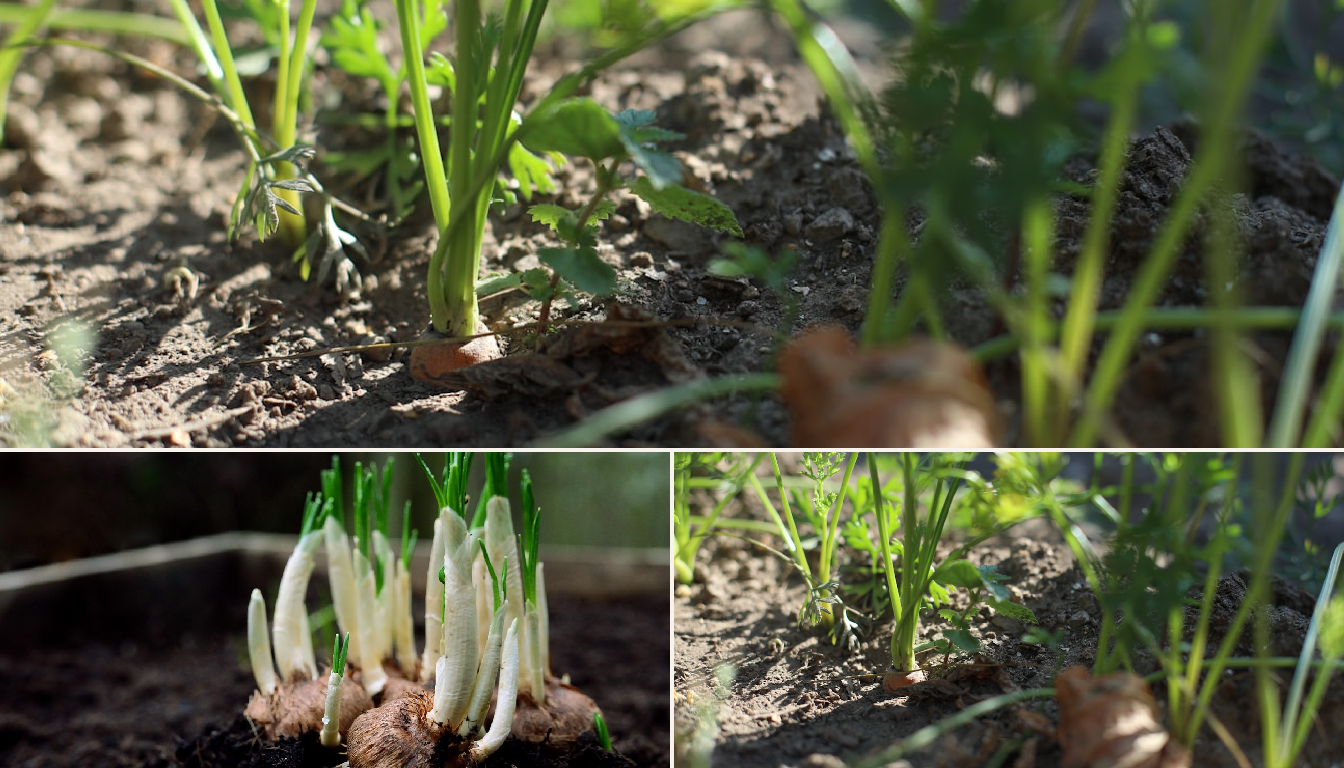
1. Woody, bitter roots after summer heat. The leaves may look tired — yellowing, wilting, or scorched — and the harvested roots are tough, fibrous, and noticeably less sweet than spring or fall carrots. Carrots are cool-season plants; when soil temperatures climb well above their comfort zone, the root’s respiration rate outstrips photosynthesis. The plant responds by strengthening cell walls with lignin, which is exactly the woody texture you taste, while sugar accumulation slows to a crawl. Prevention means following the heat-avoid strategy faithfully: grow carrots so that root development happens during the spring and fall windows, when the soil is naturally cool, and lay a thick mulch over the bed to keep the root zone from baking.
2. Spotty or failed germination in hot, dry soil. You’ll see bare gaps along the row, or seedlings that emerge and then wilt overnight. Carrot seeds are tiny and packed with a small energy reserve — they need constant, gentle moisture for a week or more just to sprout. When Chicago’s summer sun dries the top inch of soil quickly, the seed dries out before it can germinate, and a hot, dry soil surface can form a crust that the weak sprout simply cannot push through. Prevention is to sow early in the season, before sustained heat arrives; keep the seeded bed evenly moist with a light row cover or cloth; and work the soil finely so it doesn’t form a hard cap.
3. Cracking or splitting roots near harvest. Carrots that grew through a dry spell and are then deluged by a hard summer thunderstorm often split open. The root’s interior absorbs the sudden water and expands quickly, while the outer skin — hardened from slow growth in dry soil — can’t stretch in time. The result is a radial crack running lengthwise down the root. Prevention is to keep soil moisture even through the growing period: water deeply during dry stretches instead of waiting for rain, and mulch to slow evaporation so plants don’t swing between parched and soaked.
4. Forked or stunted roots from soil hardness. Misshapen roots — forked, twisted, or stubby — happen when the taproot meets a physical barrier at a few inches deep. Carrots need loose, deep soil to grow straight; a compacted layer, a clod, or a soil surface that has baked hard in summer heat all deflect the growing point and cause branching. Prevention is to loosen the soil deeply before planting, work in organic matter like compost to keep the ground soft, and avoid trying to grow carrots in the heat of the season, when the soil dries and hardens quickly.
→ See how your personalized garden plan comes together — watch a quick walkthrough.
Pro Tips for Carrot Success in Chicago
Loose soil is the whole game for carrots. Before seeding, work the bed a full shovel-depth and remove every stone and clod you find—carrot roots push straight down, and they fork or twist the moment they hit anything hard. If your soil runs heavy, plant in a low raised bed or work in a generous layer of compost so the roots have an easy, uniform medium to grow through.
Watering decides whether the seeds even come up. Carrot seed is slow to sprout and sits near the surface, so the top inch of soil needs to stay uniformly damp during that long germination stretch. Water lightly and often, and laying a board or burlap over the row holds moisture in; pull it off once the first seedlings show. Through summer, switch to deep, less frequent watering. Steady, even moisture keeps roots from cracking and prevents the dry-then-flood cycle that turns carrots woody.
Respect the spacing. At 0.25 square feet per plant, thin seedlings to about three inches apart with rows roughly a foot apart. Thinning feels wasteful, but crowded carrots stay skinny and compete for water; thin in the cool of the evening and water right after to settle disturbed soil.
For companions, plant onions or chives nearby—their allium scent is the classic way to mask carrots from carrot fly. Fast-germinating radishes earn their place too: sow a few in the row to mark where the slow carrots are, then pull them before they crowd the bed.
Get Your Personalized Garden Plan
The guidance above gives you a sound answer for Chicago: carrots are a cool-season crop, so in zone 6a the reliable windows are early spring, before heat settles in, and late season as temperatures cool back down. That general picture serves most gardeners well. But every garden is its own small world — a sunny south-facing bed, a wind-exposed corner, or a heat-retaining wall can shift those windows meaningfully even within the same zone. If you'd like your planting plan to reflect your exact spot, TheYardWise creates personalized garden plans from local climate data for your precise location, so your timing matches your garden's reality.