Best Time to Plant Spinach in Denver
Understanding Denver's Climate for Growing Spinach
In a Denver fall, the garden is winding down — warm-season crops pulled, days shortening, first frost still ahead — and that quiet stretch is exactly when spinach does its best work here. Spinach's main constraint in this climate is heat, not cold.
Zone 5b describes how cold an average Denver winter gets, which is what governs whether perennials survive it. For spinach grown as a cool-season leaf crop, the number that shapes the season more is 1,561 GDD — growing degree days, essentially the season's accumulated warmth. GDD generally tracks how quickly a plant develops, and here that development is a countdown rather than a bonus: heat pushes spinach toward bolting, and once it bolts it stops producing tender leaves. A long, warm accumulation is what ends the crop, not frost.
That's why Denver's 161-day frost-free stretch, framed by the May 5 last-frost reference and the October 13 first fall frost, is far wider than spinach's usable window. The spring window is early, before sustained heat sets in; May 5 tells you when hard frosts typically stop, not when to start sowing. The fall window opens as temperatures drop below spinach's heat-stress threshold and can run right up to that October frost.
Soil is the other quiet advantage: Denver's typical garden loams run between pH 5.5 and 7.2, with 6.3 as a sensible default — moderately acidic to neutral, and comfortably within spinach's range. Cool nights, decent soil, and a fall window that offers what summer never will.
Optimal Planting Window for Spinach in Denver
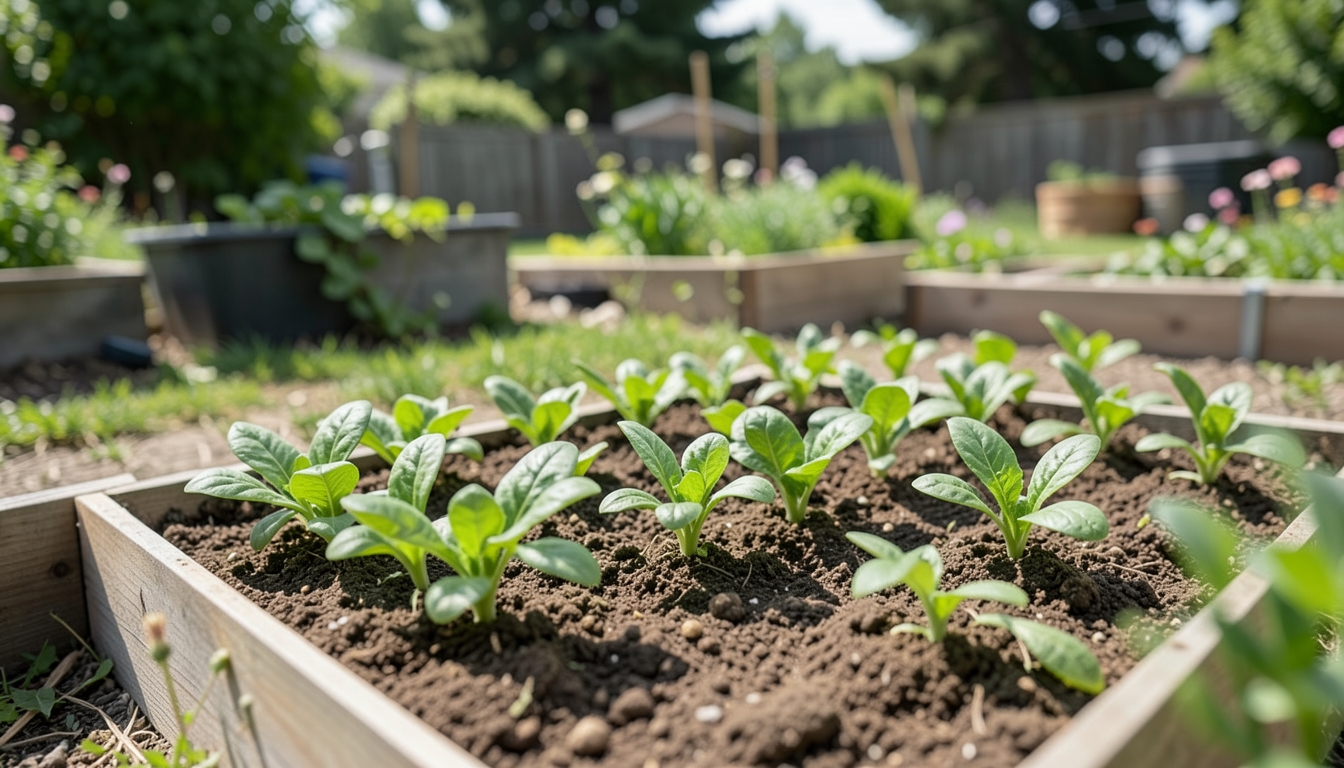
Timing is what you actually control here, and in Denver spinach is a shoulder-season crop: you're aiming for the early part of the season, before sustained heat sets in, and again late, as temperatures drop back below the heat-stress threshold. Both windows are best described in seasonal terms rather than fixed dates, because in this climate they move with the year — a warm spring can close the spring window early, and a cold snap can push it back. Think "early spring" and "cooling fall," and read the conditions rather than the calendar. Fall is often the easier of the two runs, since the season is heading toward cool rather than away from it.
Why timing is so decisive: heat is the limiting factor for spinach. Once warm days and warm nights settle in, growth stalls and plants run to seed instead of putting out leaves. Sown at the right moment, you're cutting tender leaves; sown a couple of weeks late, you're picking a handful of small, bitter ones.
Three signals tell you when to move:
- Soil temperature and feel. Cool, workable soil is your green light — spinach germinates and grows in ground that still feels cold to the touch. If the soil has already warmed up, you've probably missed the spring window.
- Day length plus afternoon heat. Lengthening days combined with warm afternoons are what trigger bolting. Sowing before that combination sets in is the whole game.
- Count the 40 days. Spinach needs roughly 40 days from sowing to a first cutting, so the cool stretch has to last long enough to carry the crop through. For fall planting, count back from when hard freezes typically arrive in your area and leave yourself that six-week cushion.
Your own garden will shift these windows a bit — a bed that warms early against a wall, or a low spot that holds cold, can move the timing by a week or more in either direction. A YardWise personalized report accounts for those specifics at your address.
Common Problems When Growing Spinach in Denver
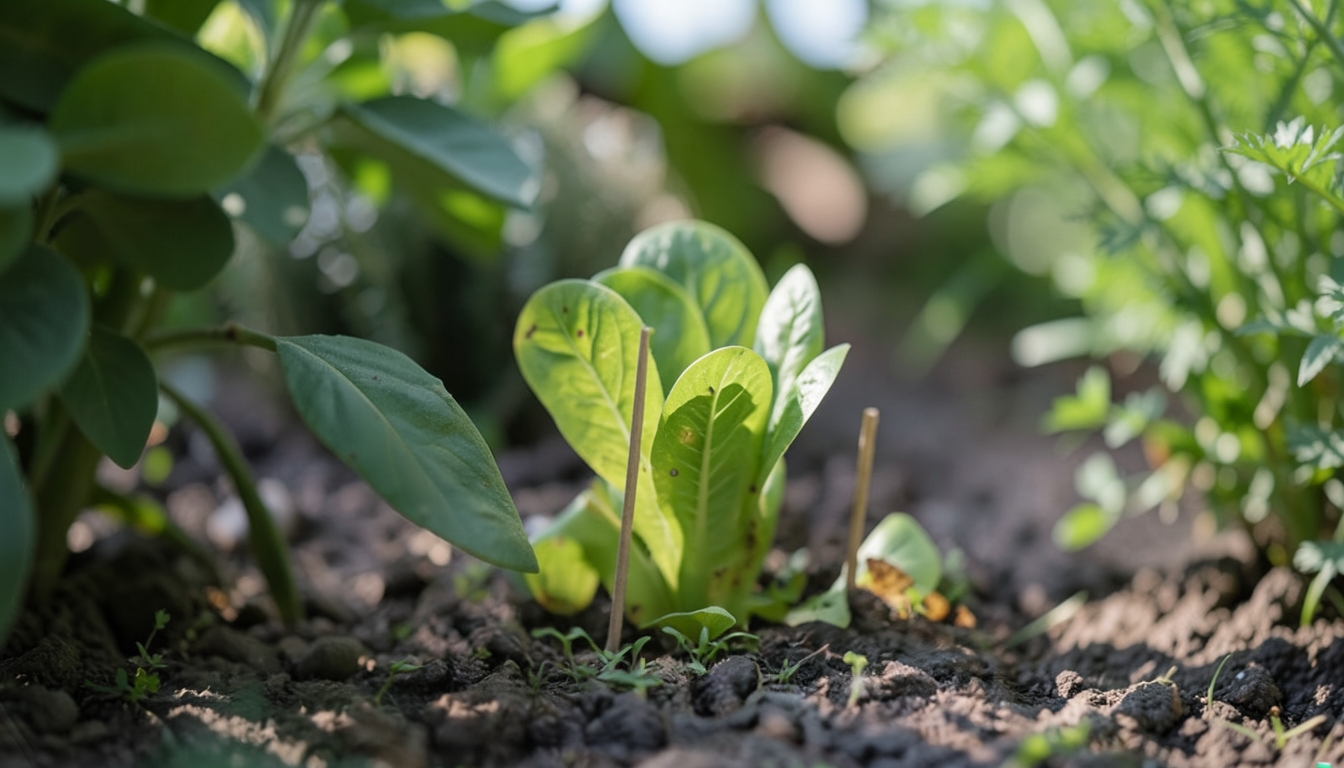
Where timing slips, the failures cluster around a single mismatch: spinach is built for cool weather, and Denver's warmth arrives fast and firmly. Spinach is frost-hardy, so cold snaps are rarely the problem — heat is what does the damage. Four problems follow from that mismatch, and all of them are easier to prevent than to fix.
Bolting is the classic disappointment. The plant suddenly shoots up a central stalk, leaves shrink and turn pointed, and the taste goes bitter and soapy. As a cool-season, long-day crop, spinach responds to climbing temperatures and lengthening days by raising internal gibberellin levels and switching from leaves to seed. Because the spring warm-up can be abrupt, a sowing that looked fine can run to seed within days. Bolt-resistant varieties, afternoon shade, and evenly moist soil — dry roots accelerate the shift — all buy harvest time.
Heat stress looks like yellowing leaves, crisp brown edges, stalled growth, and a harsh flavor. Spinach's enzymes and photosynthetic machinery run best in cool air. Heat speeds respiration and transpiration faster than roots can replace water, especially in Denver's dry air and intense high-altitude sun. Shade cloth, a thick mulch, and steady irrigation during hot spells keep plants productive longer. Once a plant has bolted or scorched, it will not return to tender leaf production, which is why prevention carries the whole burden.
Poor emergence and damping-off show up as seeds that never appear or seedlings that topple at the soil line. Spinach seed germinates in cool soil, but cold, saturated soil invites rot organisms and deprives the seed of oxygen. Plant when soil is workable and drains freely, avoid overwatering, and lean on raised beds or light organic matter for drainage.
Downy mildew and leaf spots appear as pale yellow patches on top of leaves with grayish-purple fuzz beneath, often after cool, humid nights. The same cool, damp conditions spinach enjoys also favor these pathogens, particularly with overhead watering and crowded plants. Water at the base, thin for airflow, and choose resistant varieties.
None of these is guaranteed in a given year — Denver's overall climate limitations for spinach are not severe — but each becomes much more likely whenever the crop is pushed into warm weather.
Pro Tips for Spinach Success in Denver
Prevention is where the real work happens, and it all points one direction: keep plants cool, moist, and moving fast. Take advantage of spinach's willingness to grow in partial shade. A spot that gets morning sun but shade through the hottest part of the afternoon stays noticeably cooler at soil level, which keeps leaves tender and delays the shift to flowering. In an open, all-day-sun bed, a sheet of shade cloth over the row does the same job once the season turns warm.
Water steadily rather than deeply and rarely. Spinach roots are shallow, so they dry out before you'd expect, and a plant that cycles between drought and drenching stresses faster and bolts sooner. Keep the top inch or two of soil consistently damp, and mulch the row to hold that moisture and buffer soil temperature. Well-drained, compost-enriched ground matters too — spinach sulks in crusted or waterlogged soil, and Denver's swings reward a bed that holds water evenly.
Spacing is simple: give each plant about six inches of room. Spinach isn't a crop you can train upward, so tight, even spacing in the ground is what you're working with, and crowding invites damping-off and uneven watering.
For companions, radishes and leaf lettuce are natural fits — both share spinach's cool-season window and its moisture needs, and radishes break a crusted surface and mark the row while the slower spinach fills in. Keep taller, sprawling neighbors out, or they'll shade and out-compete a crop that's already racing the heat.
Get Your Personalized Garden Plan
The general guidance covers what most Denver gardeners need to know about timing spinach around heat. What stays personal is your own ground: a south-facing bed that warms early, a wind-exposed corner that cools faster, or a heat-retaining wall can all shift your real planting dates, even within Zone 5b. TheYardWise builds personalized garden plans from your exact location data — your microclimates, your soil, your frost and heat patterns — so the timing fits your garden rather than an average. See your planting plan for Denver.
Data Sources & Methodology
Climate
External Source: Open-Meteo ERA5 30-year historical climate (archive-api.open-meteo.com) · USDA Plant Hardiness Zone Map
- USDA Plant Hardiness Zone: 5b
- Average Last Spring Frost: May 5
- Average First Autumn Frost: October 13
- Growing Degree Days: 2573
- Approx. Growing Season Length: ~161 days
Plant
Internal Knowledge Base: TheYardWise Plant Database · Crop Agronomy Database
- Frost Tolerance: Hardy
- Days to Maturity: 40
- Typical Zone Soil pH Range: 5.5–7.2 (target ~6.3)
Decision Rules
TheYardWise Agronomy Rules Engine:
- Frost Risk Evaluation
- GDD / Heat-Accumulation Rule
- Heat Stress Evaluation
- Growing Season Rule
Decision Trace
Recommendation: Early in the season, before sustained heat sets in
Data: Heat exposure: 5 month(s)/yr where average high exceeds the crop's optimal upper bound (68°F); heat-stress days (Tmax >90°F): 26; lethal-heat days (Tmax >95°F): 5
Rule: Heat Stress Evaluation
Source: Open-Meteo ERA5 30-year historical climate (archive-api.open-meteo.com)
Recommendation: Frost is a minor constraint — hardy crops tolerate hard freezes; sow as soon as the soil can be worked.
Data: Average last frost May 5; first fall frost October 13; crop frost tolerance: Hardy
Rule: Frost Risk Evaluation
Source: Open-Meteo ERA5 30-year historical climate (archive-api.open-meteo.com)
Recommendation: Growing degree days (2573) support the crop's heat-unit maturity requirement
Data: Growing Degree Days: 2573
Rule: GDD / Heat-Accumulation Rule
Source: Open-Meteo ERA5 30-year historical climate (archive-api.open-meteo.com)
Recommendation: Growing season (~161 days) supports this crop
Data: Approx. Growing Season Length: ~161 days
Rule: Growing Season Rule
Source: Open-Meteo ERA5 30-year historical climate (archive-api.open-meteo.com)
Recommendation Confidence: Medium
Reviewed: October 2026