Best Time to Plant Cucumbers in Seattle
Understanding Seattle's Climate for Growing Cucumber
Planting cucumbers the moment the last frost passes is the mistake that costs Seattle gardeners the most. Seeds dropped into cold, wet ground rot before they sprout, and transplants that survive sit stunted for weeks. March 20 marks when hard frosts typically stop — a frost-risk marker, not a planting signal. For a warm-season crop like cucumber, the gate is soil temperature, and soil warms far more slowly than air.
Zone 8b describes winter cold extremes, which matters for perennials and shrubs but does little for an annual cucumber. What shapes this crop's season is the heat budget. Seattle accumulates about 1,128 growing degree days — a running measure of warmth above the temperature at which plants begin to grow. That's a workable but not generous total for a plant that grows, flowers, and sets fruit fastest in heat. Cool nights slow vine growth and can delay female flowering, so the practical aim is to capture the warmest stretch available rather than simply the longest one.
The frost-free window runs from that March date to November 26 — 251 days. That's a long season, but cucumbers don't use all of it well. Their preferred range sits in the warm core, not the cool shoulders, and the mild, humid margins of that window are precisely what downy mildew favors — under constant pressure here — alongside powdery mildew, bacterial wilt, and mosaic viruses. A long frost-free season in a cool climate is a mixed gift: more calendar, slower growth, higher disease risk.
Those margins look different from one bed to the next, and that's where a general answer stops: your soil's actual temperature, your microclimate, and the resistant varieties that suit your space are all garden-specific. A personalized report from TheYardWise works those out for your ground.
Optimal Planting Window for Cucumber in Seattle
If the frost date won't set your planting day, what will? Not the calendar and not Seattle's average last frost of March 20 treated as a green light. That date is a climate reference — it tells you when hard frost risk typically ends, not when the soil is ready. Cucumbers are a warm-season crop, and cold soil is what actually stops them: seed sitting in ground that's still chilled tends to rot or stall rather than sprout, and transplants sulk instead of growing.
So the planting window here is best described qualitatively rather than as a fixed range. It opens after frost risk has passed and once the soil has genuinely warmed — which in this zone usually means the back half of spring rather than the weeks right around that March frost average. Soil warm-up lags air temperature by weeks, not days, and that lag is your primary constraint.
The signals worth watching are simple:
- Soil, not air. Push a finger a few inches down on a sunny afternoon, then check again the next morning. If it's warm both times, you're close. A single mild day proves nothing.
- Nights. No frost in the forecast, and evenings that no longer turn sharply cold. Cucumbers are frost-tender and slow badly in cool nights.
- Day length. The long days of late spring and summer are what push vines into strong growth; short, cool days keep them stalled.
Timing matters because of the roughly 60 days to maturity. Plant in the back half of spring and you're harvesting from mid-to-late summer, with picking often stretching into early fall if you keep fruit off the vines. A cold, early start doesn't buy you an earlier harvest — it just delays everything while the plants recover.
What stays personal is how fast your ground warms: a south-facing bed against a wall will be ready before a wind-exposed or low-lying spot, even in the same neighborhood. That difference, not the city average, is what sets your planting day.
Common Problems When Growing Cucumber in Seattle
Once you've timed it right, the troubles that remain mostly trace back to two things: a cool, damp growing season and a plant that grows fast and drinks hard.
Cold, wet soil that stalls or kills seedlings. You sow, and either nothing comes up or a sprout collapses at the soil line, pinched and pale. Cucumbers are tender, with no frost tolerance at all, and their germination and early root growth depend on soil warmth rather than air temperature. In cool, saturated spring soil, germination stalls and soil-dwelling fungi — which thrive in exactly those conditions — outpace the seedling. Prevention is mostly about temperature: wait until the soil has genuinely warmed rather than sowing the moment the frost risk has passed, warm beds ahead of time with black plastic or a cloche, and plant into raised or well-drained ground so roots aren't sitting in cold moisture.
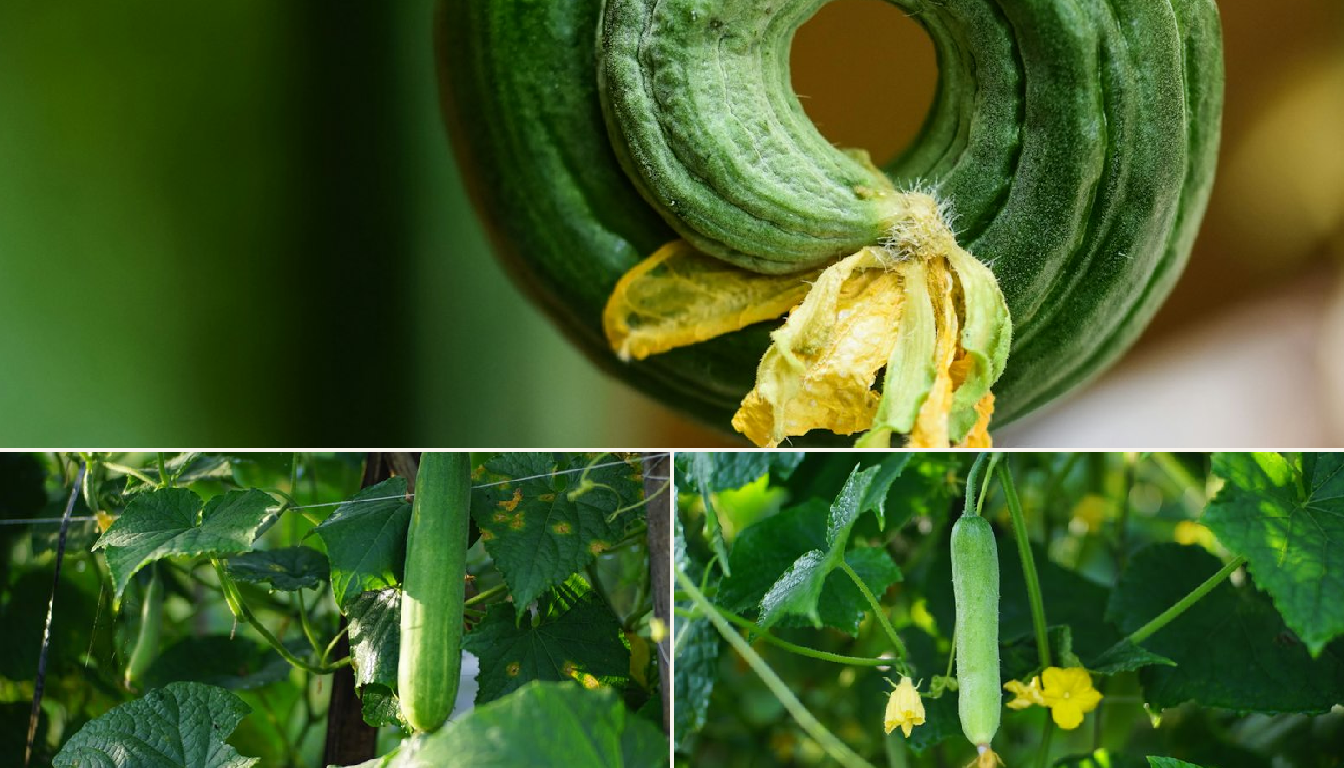
Fungal leaf disease. Watch for white powdery patches or angular yellow-brown blotches spreading across leaves, with foliage crisping from the bottom of the vine upward and fruit sizing poorly. Cool nights, heavy dew, and rain keep leaf surfaces wet, which is what fungal spores need to germinate and infect; a dense, sprawling canopy traps that moisture and blocks airflow. Space and trellis plants to keep leaves dry and moving, water at the base in the morning rather than overhead, and choose varieties bred for disease resistance. Removing affected leaves early slows the spread.
Poor pollination and misshapen fruit. Flowers drop without setting, or you get fruit that bulges at one end and pinches at the other, along with small yellow fruits that shrivel. Cucumbers carry separate male and female flowers and depend on insects to move pollen between them. Cool, wet, or windy stretches keep pollinators grounded, and the first flowers a vine produces are often male-only. Planting in a block rather than a single row, keeping pollinator-friendly flowers nearby, holding off on sprays while vines are blooming, and hand-pollinating with a soft brush all help.
Moisture stress and bitterness. Cucumbers have a high water requirement: the fruit is mostly water, and the vines are shallow-rooted and fast-growing. Short dry spells during fruit development concentrate bitter compounds and deform the fruit, while swings between drought and soaking do the same. Deep, consistent watering on a drip line, plus mulch to steady soil moisture, prevents most of it.
How much of this you face comes down to your particular beds — how they drain, how much sun they hold, and how your microclimate shifts the timing.
Pro Tips for Cucumber Success in Seattle
Most of those problems shrink when you start the plants off warm. Give cucumbers the warmest, sunniest spot you have, and let soil temperature — not the calendar — be your green light. Cucumbers need full sun, and in a zone 8b garden with cool, cloudy stretches, a south-facing bed against a wall or a raised bed warms noticeably faster than open ground. Covering the bed with black plastic or a dark mulch for a week or two before planting pushes soil temperature up further, which matters because soil warm-up is the real gate here, not frost alone. Cold, wet roots stall growth long before the air does.
Water evenly, at the base, and mulch to hold that moisture steady. A drip line or soaker hose keeps foliage dry, which limits disease in Seattle's humid air, and even moisture prevents the bitter, misshapen fruit that comes from swinging between drought and soak. One caution: hold off on heavy watering while the soil is still cold, since wet soil warms slowly.
Cucumbers are natural climbers, so give each plant about 2 square feet and train the vines up a trellis or netting instead of letting them sprawl. Lifting the vines improves airflow around the leaves, keeps fruit clean and easy to find, and makes far better use of a small bed.
For companions, radishes and marigolds are easy neighbors. Radishes mature quickly, mark your rows, and loosen the surface as you pull them; marigolds are a long-standing planting partner for deterring pests. Neither competes hard with cucumber roots, so both fit neatly alongside the trellis. Get the warmth and the spacing right, and the rest of the season tends to look after itself.
Get Your Personalized Garden Plan
The general answer is straightforward: for cucumbers in Seattle, the real gate is soil warm-up after frost risk passes, not the March 20 average last frost date itself. What stays specific to your garden is how that plays out locally — a south-facing bed that heats early, a wind-exposed corner that stays cool, or soil against a heat-retaining wall can each shift your actual planting date within Zone 8b. TheYardWise builds personalized garden plans from your exact location data, so the timing reflects your ground, not a citywide average. See your planting plan for Seattle.
Data Sources & Methodology
Climate
External Source: Open-Meteo ERA5 30-year historical climate (archive-api.open-meteo.com) · USDA Plant Hardiness Zone Map
- USDA Plant Hardiness Zone: 8b
- Average Last Spring Frost: March 20
- Average First Autumn Frost: November 26
- Growing Degree Days: 1128
- Approx. Growing Season Length: ~251 days
Plant
Internal Knowledge Base: TheYardWise Plant Database · Crop Agronomy Database
- Frost Tolerance: Tender
- Days to Maturity: 60
- Typical Zone Soil pH Range: 5–8.2 (target ~6.6)
Decision Rules
TheYardWise Agronomy Rules Engine:
- Frost Risk Evaluation
- GDD / Heat-Accumulation Rule
- Heat Stress Evaluation
- Growing Season Rule
Decision Trace
Recommendation: After frost risk has passed (average last frost March 20), once the soil has warmed
Data: Average last frost March 20; first fall frost November 26; crop frost tolerance: Tender
Rule: Frost Risk Evaluation
Source: Open-Meteo ERA5 30-year historical climate (archive-api.open-meteo.com)
Recommendation: Heat-stress window bounds the usable planting season
Data: Heat exposure: 0 month(s)/yr where average high exceeds the crop's optimal upper bound (86°F); heat-stress days (Tmax >90°F): 1; lethal-heat days (Tmax >95°F): 0
Rule: Heat Stress Evaluation
Source: Open-Meteo ERA5 30-year historical climate (archive-api.open-meteo.com)
Recommendation: Growing degree days (1128) support the crop's heat-unit maturity requirement
Data: Growing Degree Days: 1128
Rule: GDD / Heat-Accumulation Rule
Source: Open-Meteo ERA5 30-year historical climate (archive-api.open-meteo.com)
Recommendation: Growing season (~251 days) supports this crop
Data: Approx. Growing Season Length: ~251 days
Rule: Growing Season Rule
Source: Open-Meteo ERA5 30-year historical climate (archive-api.open-meteo.com)
Recommendation Confidence: Medium
Reviewed: September 2026