Best Time to Plant Tomatoes in Seattle
Understanding Seattle's Climate for Growing Tomato
In late September, Seattle tomato vines are often still hung with fruit, the first fall frost typically weeks away — and much of that fruit struggles to ripen on the plant. That mismatch is the whole story of growing tomatoes here: a very long frost-free window paired with a modest supply of heat.
USDA Zone 8b describes winter, not summer. It tells you the coldest nights are mild enough that many plants survive outdoors, which is why the season stretches from an average last frost around March 20 to a first fall frost near November 26 — roughly 251 frost-free days. What the zone can't tell you is how much warmth those days actually deliver: 1,128 growing degree days across the season, plenty of calendar but comparatively little heat per day. Tomatoes ripen on accumulated warmth, so the crop tends to come in slowly and late rather than failing outright.
That is why the March 20 frost date is a reference, not an instruction. It marks the earliest point frost risk eases; it is not a planting signal. The real gate is soil warm-up after that risk passes, because cold, wet ground stalls root growth and nutrient uptake and leaves transplants sitting there. Wait for genuinely warm soil, not just a safe calendar.
The long runway to November 26 is the opportunity — room for succession plantings and a late crop of early varieties. Disease pressure — wilts, early blight, nematodes, TSWV — makes resistant varieties (the V, F1F2, N, TSWV, EB and LB codes) a sensible default. Soil pH defaults near 6.6 but swings widely depending on where you garden, so test before amending.
Your own bed's soil temperature and shelter are what ultimately set the date.
Optimal Planting Window for Tomato in Seattle

The decision point, then, is soil warmth rather than a date on the calendar. The average last frost around March 20 tells you when hard frosts typically stop — the earliest point worth considering, not the start of planting. For a warm-season crop like tomato, the ground has to catch up first.
That gap matters more here than in hotter regions. Tomatoes stalled in cold soil don't just sit still; they sulk, with slow root growth and yellowing leaves that can set them back for weeks. Because this crop needs roughly 75 days from transplant to harvest, a late start pushes ripening into the stretch where fall cold can end the season before the fruit finishes. Get the timing right and you get a full harvest; miss it and you get a lot of green fruit.
The spring window is genuinely qualitative: it opens once frost risk has passed and the soil has warmed. So rather than picking a date, watch for the signals.
- Soil temperature, not air temperature — push a probe a few inches down in the morning. If it still reads cold to the touch, wait another week or two.
- Night temperatures — once nights stop dropping near freezing and stay mild, the risk of cold setback drops sharply.
- Day length — steadily lengthening days from mid-spring onward drive the light and warmth that push new growth.
Those three tend to align in the later part of spring. If you want to hedge, soil warmth is the one to trust: a plant set out in cool ground rarely outperforms one set out a couple of weeks later into warm ground.
What stays personal is how your specific site behaves — a south-facing wall or raised bed warms up well ahead of a shaded or wind-exposed spot, and that difference can shift your window by weeks. A personalized report for your garden can pin down the timing your particular beds actually support.
TheYardWise
Common Problems When Growing Tomato in Seattle

Get the timing right and most of this becomes easier, but a few failures show up often enough in a zone 8b garden to plan around. Tomatoes are tender plants, and their most frequent setbacks trace back to cool, wet conditions rather than any single pest or disease.
A transplant that meets cold, saturated soil simply stalls. Instead of pushing new roots and leaves, it sits there with yellowing or purplish foliage for weeks, and the setback can delay the whole season. The cause is physiological: root growth and nutrient uptake both slow sharply in cold soil, so the plant can't support the top growth it already has. Let the soil warm before planting, then help it along with black plastic mulch, cloches, or row cover, and harden transplants off gradually so they aren't shocked twice over.
Flowers that form and then dry up and drop without setting fruit are a second classic frustration. Pollen germination and pollen-tube growth are temperature-sensitive, and chilly nights interfere with that process, so blooms abort even on otherwise healthy plants. Overfeeding with nitrogen makes it worse by pushing leafy growth at the expense of fruit. Time the crop so flowering lands in reliably mild conditions, protect plants on cold nights, and keep fertility balanced rather than lush.
Blossom-end rot shows up as a sunken, leathery dark spot on the bottom of the fruit. It isn't an infection, it's a calcium-delivery problem: calcium moves through the plant in the water stream, and because fruit tissue barely transpires, it depends on steady moisture reaching the roots. Drought, fluctuating watering, or disturbed roots can starve the fruit even when soil calcium is fine. Consistent irrigation, mulching, and avoiding root damage are the practical levers.
Finally, the cool, damp stretches that define much of the growing season favor foliar fungal disease, including late blight — dark, water-soaked lesions on leaves and stems that can collapse a plant quickly. Spores travel on wind and splash, and long leaf-wetness periods let them establish. Prevention is structural and cultural: generous spacing for airflow, watering at the soil line in the morning, mulch to block splashing, prompt removal of volunteers and nightshade-family debris, and choosing resistant varieties where disease pressure is high.
Your specific bed, cultivar choice, and microclimate determine which of these actually bites — that's where a personalized TheYardWise report picks up.
Pro Tips for Tomato Success in Seattle
Notice that every problem above comes back to the same two levers: warmth and airflow. In Seattle's cool, cloudy shoulder seasons, the biggest lever isn't fertilizer — it's those two. Claim the sunniest, most sheltered ground you have: full sun is a hard requirement here, and a south-facing bed or a spot against a heat-retaining wall will ripen fruit noticeably earlier than an exposed or shaded site.
Since cold soil is what stalls tomatoes, treat soil temperature as something you manage rather than just wait for. Raised beds and dark plastic mulch warm the root zone faster, and holding back on early watering keeps the ground from staying chilled and soggy. Once plants are established, switch to deep, less frequent watering aimed at the base rather than the leaves — wet foliage in still, humid air is an open invitation to blight.
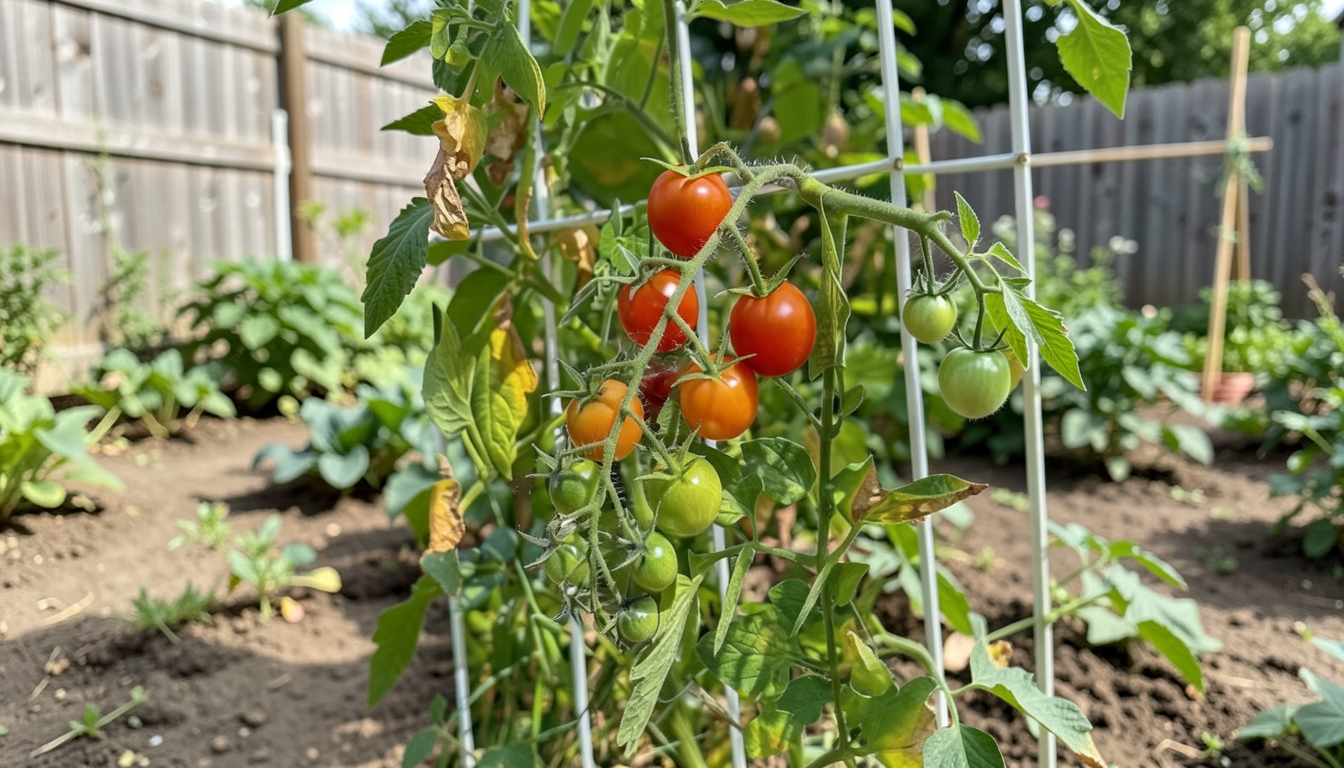
Tomatoes are natural climbers, so grow them up rather than out. Stake or cage each plant and give it 4 square feet per plant. The upright habit improves airflow around the leaves, which is exactly what suppresses disease in a damp climate, and it keeps ripening fruit off the ground and easy to reach.
For companions, basil is the classic partner — it wants the same full sun and warm soil, sits comfortably in the space below without competing hard, and gives you a second harvest. Marigolds are the other traditional choice, often planted at the edges for their pest-deterring reputation.
Your exact bed, exposure, and soil will shift these details, which is where a personalized plan earns its keep.
Get Your Personalized Garden Plan
The general guidance above covers the common question — for Seattle's Zone 8b, tomatoes are warm-season plants gated by soil warm-up after frost risk passes, so the timing really does come down to waiting for consistently warm soil.
What a general answer can't account for is your specific spot. A sunny south-facing bed, a wind-exposed corner, or a heat-retaining wall can all shift soil temperature and frost exposure differently, even within the same USDA zone.
That's where TheYardWise comes in: a personalized plan built from your exact location data, so the timing fits your garden rather than an average.
See your planting plan for Seattle.
Data Sources & Methodology
Climate
External Source: Open-Meteo ERA5 30-year historical climate (archive-api.open-meteo.com) · USDA Plant Hardiness Zone Map
- USDA Plant Hardiness Zone: 8b
- Average Last Spring Frost: March 20
- Average First Autumn Frost: November 26
- Growing Degree Days: 1128
- Approx. Growing Season Length: ~251 days
Plant
Internal Knowledge Base: TheYardWise Plant Database · Crop Agronomy Database
- Frost Tolerance: Tender
- Days to Maturity: 75
- Typical Zone Soil pH Range: 5–8.2 (target ~6.6)
Decision Rules
TheYardWise Agronomy Rules Engine:
- Frost Risk Evaluation
- GDD / Heat-Accumulation Rule
- Heat Stress Evaluation
- Growing Season Rule
Decision Trace
Recommendation: After frost risk has passed (average last frost March 20), once the soil has warmed
Data: Average last frost March 20; first fall frost November 26; crop frost tolerance: Tender
Rule: Frost Risk Evaluation
Source: Open-Meteo ERA5 30-year historical climate (archive-api.open-meteo.com)
Recommendation: Heat-stress window bounds the usable planting season
Data: Heat exposure: 0 month(s)/yr where average high exceeds the crop's optimal upper bound (30°C); heat-stress days (Tmax >32°C): 1; lethal-heat days (Tmax >35°C): 0
Rule: Heat Stress Evaluation
Source: Open-Meteo ERA5 30-year historical climate (archive-api.open-meteo.com)
Recommendation: Growing degree days (1128) support the crop's heat-unit maturity requirement
Data: Growing Degree Days: 1128
Rule: GDD / Heat-Accumulation Rule
Source: Open-Meteo ERA5 30-year historical climate (archive-api.open-meteo.com)
Recommendation: Growing season (~251 days) supports this crop
Data: Approx. Growing Season Length: ~251 days
Rule: Growing Season Rule
Source: Open-Meteo ERA5 30-year historical climate (archive-api.open-meteo.com)
Recommendation Confidence: Medium
Reviewed: September 2026